
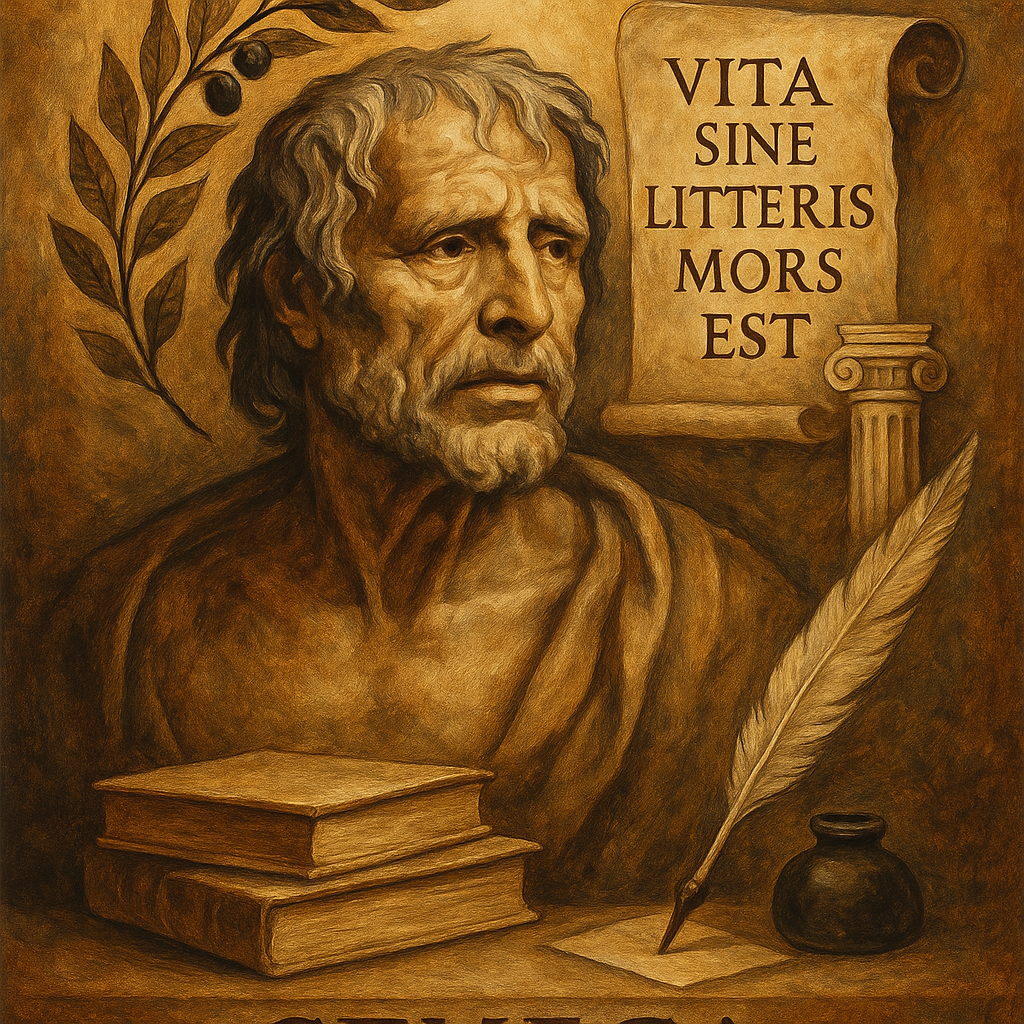
In a world often clouded by distractions and chaos, the wisdom of ancient philosophers can illuminate our paths. Lucius Annaeus Seneca, a prominent Stoic philosopher, playwright, and statesman, stands out as one such beacon. Born in Corduba (present-day Córdoba, Spain) around 4 BCE, Seneca’s life was a tapestry woven with threads of philosophical inquiry, political intrigue, and personal struggle. His thoughts resonate today, offering insights that guide us through the complexities of modern existence.
Seneca’s journey was anything but ordinary. Raised in a wealthy family, he was brought to Rome at a young age, where he received an education befitting his social status. His early career as a tutor to Emperor Nero set the stage for a life that would straddle both philosophy and power—a precarious balancing act that often led him into turbulent waters.
As the political landscape shifted, Seneca found himself embroiled in the machinations of Nero’s court. Despite his philosophical inclinations, he became entangled in a web of betrayal and manipulation, ultimately leading to his forced suicide in 65 CE. Yet, it was during his exile, following accusations of an affair with Nero’s mother, that he penned some of his most profound thoughts. His works, including “Letters to Lucilius” and “On the Shortness of Life,” showcase his reflections on the human condition, the nature of time, and the art of living virtuously.
Seneca’s philosophy emphasizes the importance of inner peace and resilience, regardless of external circumstances. His life was a testament to the Stoic belief that while we cannot control the events around us, we can control our reactions. This idea is encapsulated in his famous quote: “We suffer more often in imagination than in reality.” In this, Seneca invites us to confront our fears, suggesting that our minds can magnify our troubles far beyond their actual significance.
Seneca’s quotes are not mere strings of words but profound reflections on life, morality, and the human experience. Each quote serves as a beacon, illuminating the path toward self-understanding and resilience. For instance, another of his well-known quotes declares, “It is not the man who has too little, but the man who craves more, that is poor.” This statement challenges us to reconsider our definitions of wealth and fulfillment. In a society that often equates success with material accumulation, Seneca reminds us that true richness lies in contentment and gratitude for what we have.
Equally striking is Seneca’s assertion that “Luck is what happens when preparation meets opportunity.” This underscores the Stoic belief that while we cannot control the whims of fate, we can prepare ourselves to seize the moments of fortune when they arise. It’s a powerful reminder that our actions and attitudes shape our destinies, urging us to embrace the present and act with intention.
In essence, Seneca’s philosophy invites us to cultivate the art of mindfulness. By focusing on the present moment and recognizing the inherent value of our experiences, we can lead more fulfilling lives, free from the shackles of anxiety and regret.
The legacy of Lucius Annaeus Seneca extends far beyond his lifetime. His writings have influenced countless thinkers, writers, and leaders throughout history. From the Enlightenment philosophers who drew from his thoughts on reason and morality to modern self-help movements that echo his advice on resilience, Seneca’s influence remains palpable in contemporary discourse.
His embrace of Stoicism has surged in popularity as people seek guidance for navigating the challenges of modern life. In an age where external validation often overshadows self-acceptance, Seneca’s teachings remind us of our inherent worth and the importance of introspection. His insights into anger, grief, and joy provide a framework for emotional well-being that is as relevant today as it was in ancient Rome.
In literature and art, Seneca’s themes of fate, morality, and the human experience continue to inspire creativity. His plays, rich with complex characters and moral dilemmas, have been studied and adapted across generations, demonstrating the timeless nature of his insights.
As we navigate the complexities of our own lives, the wisdom of Lucius Annaeus Seneca offers a refuge—a gentle reminder to embrace the present, cultivate inner strength, and live with intention. His quotes serve not only as philosophical musings but as practical tools to challenge our perceptions and reshape our realities.
In a world that often feels unpredictable, Seneca teaches us that while we may not control the circumstances around us, we always have the power to choose our responses. Let us carry his teachings into our daily lives, embracing the art of living fully and authentically. In doing so, we honor not just his legacy, but the timeless pursuit of a meaningful existence.