
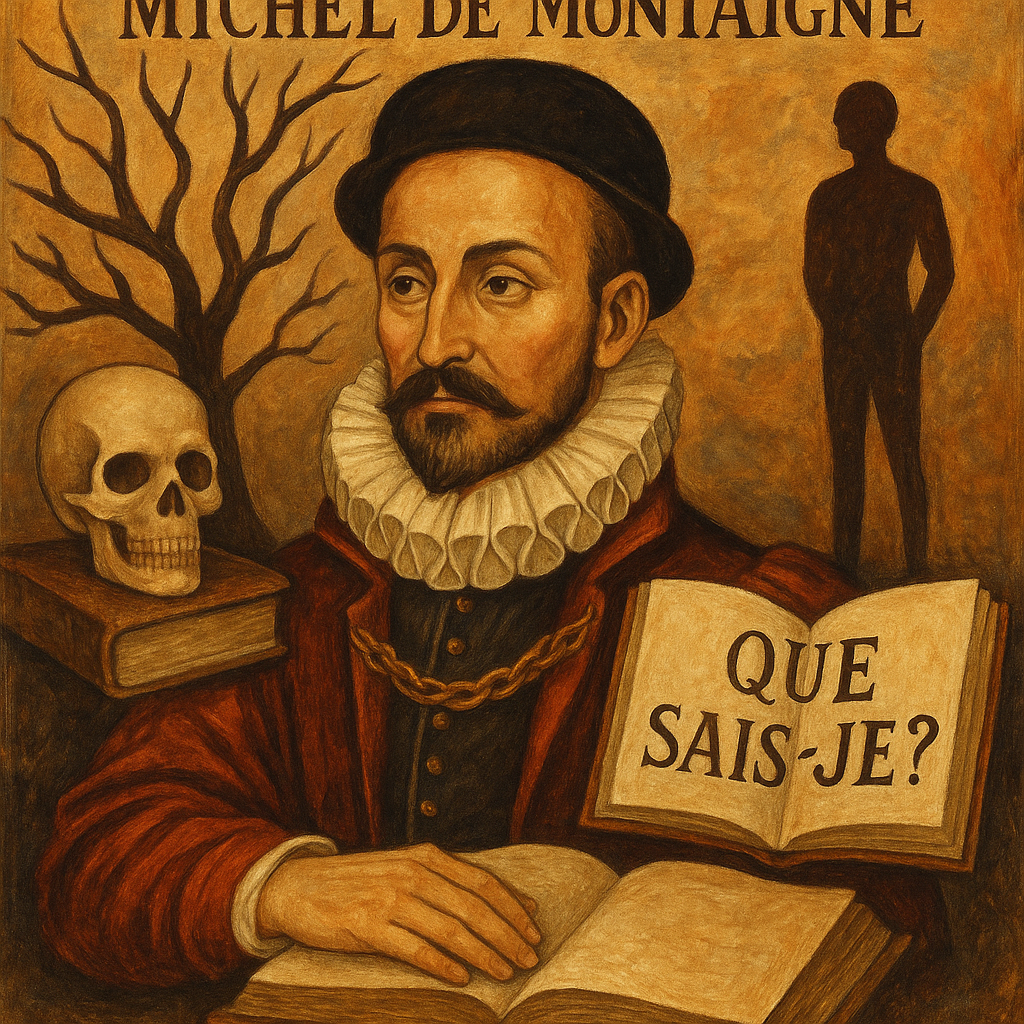
In the quiet, contemplative world of the Renaissance, one man stood out for his ability to navigate the complexities of human thought and experience. This man was Michel de Montaigne, a philosopher, essayist, and a true pioneer of personal reflection. His writings resonate with us even today, inviting readers to explore the depths of their own thoughts and feelings. As we delve into the life of Montaigne, we will uncover the richness of his biography, the profound meanings behind his quotes, and the enduring legacy he left behind.
Born on February 28, 1533, in the region of Aquitaine, France, Montaigne was the son of a wealthy nobleman. His early life was steeped in privilege, yet it was also marked by a unique educational philosophy. His father believed in an unconventional approach to learning: Montaigne was raised by a nurse who spoke to him exclusively in Latin, ensuring he would be fluent in the language by the age of six. This early immersion in language would serve him well throughout his life, allowing him to articulate complex ideas with clarity and depth.
Montaigne’s life was not without its challenges. The death of his father and the political turmoil of France during the Wars of Religion deeply affected him. In 1569, seeking solace and a deeper understanding of life, Montaigne withdrew to his family estate in the Périgord region. It was here that he began to write his most significant work, “Essais” (Essays), a collection of reflections on various subjects, including friendship, death, and the nature of humanity. His essays were groundbreaking; they blended personal anecdotes with philosophical musings, creating a new genre that would influence countless writers and thinkers.
Montaigne’s quotes are often laced with a profound understanding of human nature and the complexities of life. One of his most famous quotes encapsulates this insight: “The greatest thing in the world is to know how to belong to oneself.” This statement reflects Montaigne’s belief in the importance of self-awareness and authenticity. In an age where societal expectations often dictate personal identity, Montaigne encourages us to embrace our uniqueness and cultivate our inner selves.
This theme of self-reflection permeates much of Montaigne’s work. He believed that to truly know oneself is to embark on a lifelong journey of exploration. In his essays, he often examined his own thoughts and experiences, using them as a lens through which to understand broader human conditions. Montaigne’s willingness to confront his vulnerabilities resonates deeply with readers, reminding us that introspection is not merely an exercise but a vital aspect of being human.
Another poignant quote from Montaigne is, “We must judge a man by the trials of his life.” This statement speaks to the essence of empathy and understanding. Montaigne understood that everyone carries their own burdens and struggles, and true wisdom lies in recognizing the complexities of another’s journey. This insight has profound implications for how we relate to one another in our modern world, where judgments often stem from superficial understandings.
Montaigne’s influence on literature, philosophy, and the art of essay writing is immeasurable. His pioneering work laid the groundwork for subsequent writers, including Jean-Jacques Rousseau, Virginia Woolf, and Ralph Waldo Emerson. Through his essays, Montaigne championed the value of personal narrative, encouraging writers to draw from their own experiences as a means of connecting with their audience.
Moreover, Montaigne’s exploration of skepticism and open-mindedness found fertile ground in the Enlightenment, inspiring thinkers who questioned established norms and dogmas. His legacy, therefore, is not only in the style of writing he pioneered but also in the philosophical inquiries he provoked. The quest for self-knowledge and understanding of the human experience continues to be a cornerstone of modern thought, echoing Montaigne’s enduring spirit.
Michel de Montaigne’s life and thoughts remind us of the beauty and complexity of the human experience. His quotes encourage a deeper understanding of ourselves and others, urging us toward introspection and empathy. As we navigate our own lives, let us carry Montaigne’s wisdom with us, embracing the journey of self-discovery and connection. In a world that often feels rushed and disconnected, Montaigne’s legacy serves as a gentle reminder to pause, reflect, and know ourselves.
In the tapestry of human thought, Michel de Montaigne’s contributions shine ever bright, illuminating paths for those who dare to ponder the depths of their own existence.