
In a world where courage is often measured by the ability to raise one’s voice against injustice, few figures embody this spirit as profoundly as Martin Luther. Born in 1483 in the small town of Eisleben, Germany, Luther’s legacy is woven into the very fabric of modern Christianity and Western thought. As we journey through his life, we will uncover the profound meaning behind some of his most powerful quotes, revealing his influence that resonates even today.
Martin Luther was not born into the weighty title of reformer; in fact, he began his adult life as a law student, following his father’s aspirations for him. However, a life-altering event—a near-death experience during a thunderstorm—prompted him to abandon his legal studies and enter an Augustinian monastery. This decision set him on a path that would change the course of history. His dedication to religious life gave birth to a profound spiritual awakening, leading him to grapple deeply with the nature of sin, salvation, and the Church’s authority.
Luther’s frustration with the Western Church’s practices, particularly the sale of indulgences, culminated in the pivotal act of posting his Ninety-Five Theses in 1517. This document, a bold challenge to the Church, sparked a reformation that resonated across Europe. As he famously stated, “Even if I knew that tomorrow the world would go to pieces, I would still plant my apple tree.” This quote embodies his unwavering belief in perseverance and hope. It reminds us that the act of striving forward, regardless of uncertainty, is a testament to human spirit and faith.
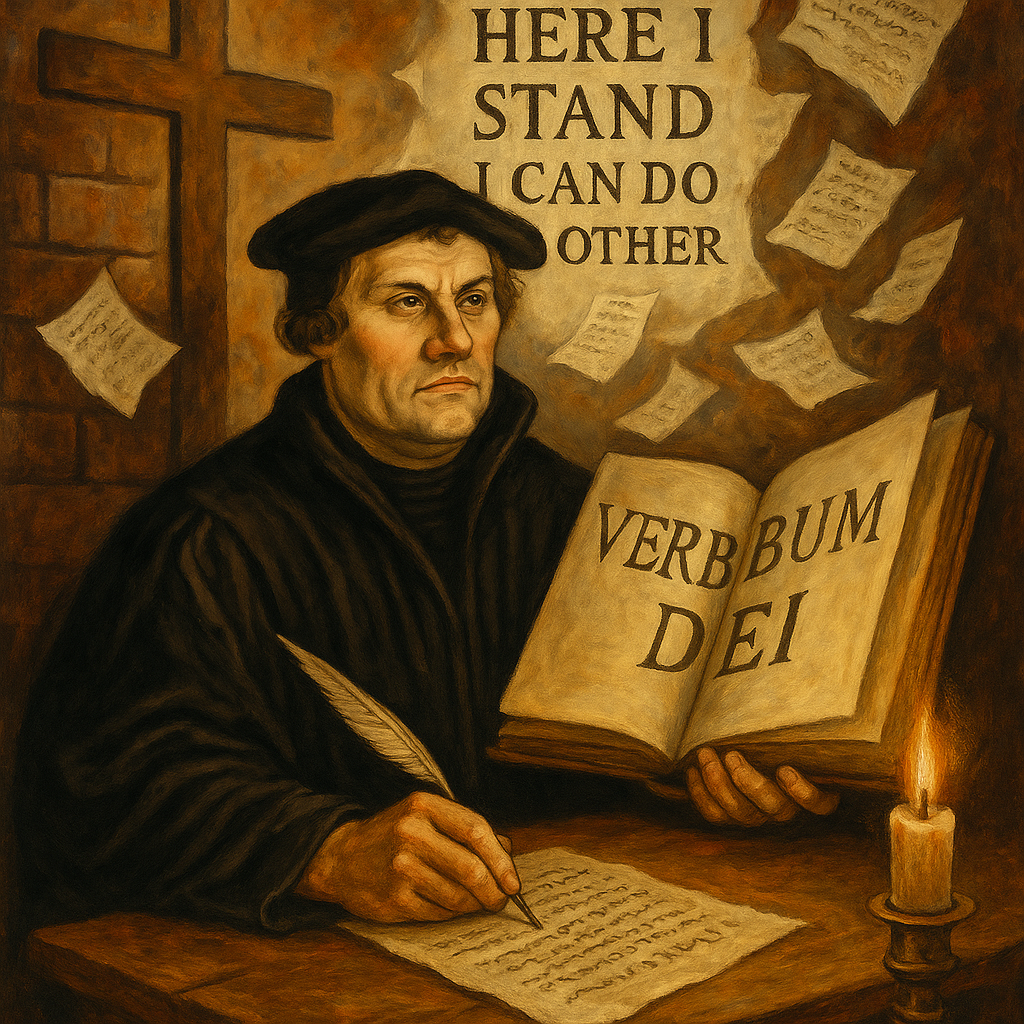
Luther’s words carry an electric charge of inspiration and conviction. His quotes often reflect his passionate resolve to stand firm in his beliefs, even in the face of overwhelming opposition. For instance, he famously asserted, “Here I stand; I can do no other.” This declaration, made during his trial at the Diet of Worms in 1521, showcases his commitment to remaining true to his convictions. Luther’s unwavering stance is a powerful reminder of the significance of personal integrity and moral courage.
Moreover, Luther’s thoughts on faith and grace continue to inspire countless individuals. “Faith is a living, daring confidence in God’s grace,” he said. This notion encapsulates the essence of his teachings: that faith is not merely a passive belief but an active relationship with the divine. Luther encouraged believers to embrace their faith boldly and without fear, inviting them to seek a personal connection with God.
His writings and sermons, filled with eloquent prose and heartfelt emotion, encouraged followers to challenge the status quo and seek a more personal and direct relationship with their Creator. This was revolutionary during a time when the Church held absolute authority over spiritual matters, and Luther’s voice became a beacon for those yearning for reform.
Luther’s influence stretches far beyond the religious landscape; he ignited a movement that laid the groundwork for modern democracy and individual rights. His actions inspired other reformers and thinkers, fostering an environment that valued questioning, debate, and the pursuit of truth. His translation of the Bible into German made scripture accessible to the common person, empowering individuals to explore their faith without the mediation of clergy.
In the centuries that followed, Luther’s legacy continued to evolve. The Reformation he sparked contributed to the rise of Protestantism, encouraging the diversification of Christian expressions and the establishment of new denominations. Luther’s thoughts on education also had lasting impacts, as he advocated for the importance of literacy and scholarly pursuit for everyone, not just the elite.
Today, as we reflect on Martin Luther’s life and his compelling quotes, we find a treasure trove of wisdom that encourages us to think critically, act courageously, and remain steadfast in our convictions. His ability to challenge authority with grace and conviction serves as an inspiration to stand up for truth in our own lives.
As we wrap our exploration of Martin Luther, we find ourselves not just looking back at a historical figure but also engaging with a timeless spirit. His calls for reform and justice echo in the hearts of those who dare to challenge the status quo today. Luther’s life reminds us that each of us carries the potential for influence, and with it, the responsibility to plant our own proverbial apple trees.
In the words of Luther, “You are not only responsible for what you say, but also for what you do not say.” May we be inspired by his courage to speak and act for what is right, ensuring that his legacy of faith, tenacity, and reform continues to shape our world for generations to come.