
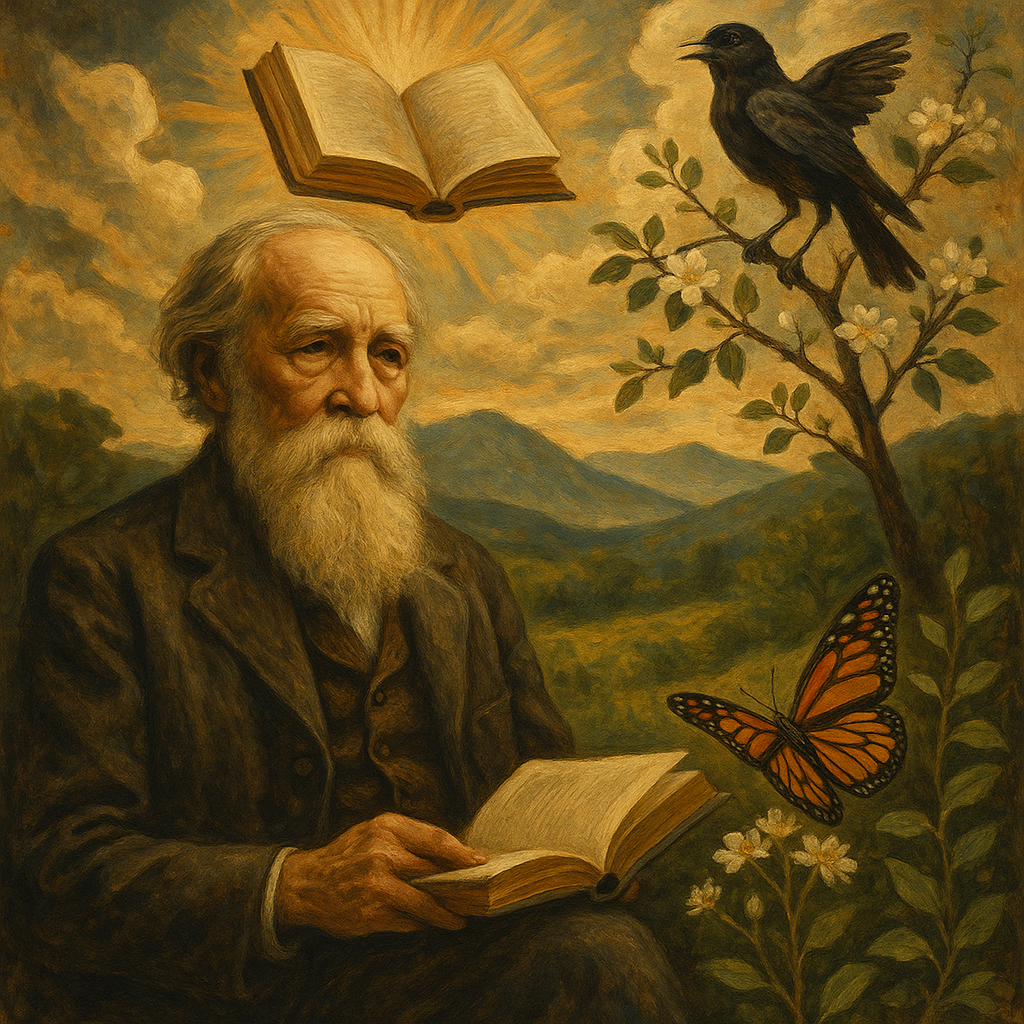
In a world teeming with the hustle and bustle of city life, the whispers of nature often go unheard. Yet, one man dedicated his life to amplifying those whispers. John Burroughs, born in 1837 in rural New York, was not just a naturalist and a writer; he was a bridge between humanity and the wild wonders of the world. Through his keen observations and heartfelt prose, Burroughs invited readers to immerse themselves in nature, offering insights that resonate as deeply today as they did over a century ago. His quotes encapsulate his profound love for the environment and humanity’s connection to it, serving as timeless reminders of our place in the tapestry of life.
John Burroughs’ early life was marked by modest beginnings. Born to a family of farmers, he grew up in a landscape that would be pivotal in shaping his worldview. With a thirst for knowledge that belied his rural surroundings, Burroughs pursued education fervently, ultimately attending the Cooper Union School and later working as a teacher. However, the call of nature was too strong to resist, and he soon turned to writing, channeling his experiences and observations into a literary career that would define him.
For Burroughs, every tree, every stream, and every bird was a source of inspiration. The publication of his first book, “Wake-Robin,” in 1871 marked the beginning of his legacy as a nature writer. His friendship with literary giants like Walt Whitman and Leo Tolstoy further solidified his position in the literary canon. Burroughs did not just observe nature; he celebrated it, delving into its intricacies with a poetic lens. His ability to articulate the beauty of the natural world made him a beloved figure in American literature, and his works continued to explore the intricate relationship between humans and their environment.
John Burroughs’ quotes are more than mere words; they are reflections of his philosophy and insights into life. One of his most famous sayings, “I go to nature to be soothed and healed, and to have my senses put in order,” encapsulates his belief in the restorative power of the natural world. In an increasingly chaotic society, Burroughs encourages us to seek solace outside, to reconnect with the earth that nurtures us.
His quote, “The smallest deed is better than the greatest intention,” serves as a poignant reminder of the importance of action over mere words. Burroughs believed that our intentions, no matter how noble, must be backed by tangible efforts. This philosophy resonates deeply in today’s world, where many of us often feel overwhelmed by the enormity of issues like climate change and social injustice. Burroughs’ message encourages us to take small, meaningful steps towards change, reinforcing the idea that every action contributes to a greater good.
Moreover, Burroughs often touched on the importance of observation. In his words, “The best thing one can do, when it’s raining, is to let it rain.” This simple yet profound statement invites us to embrace life as it comes, to be present and accept the moments we cannot control. It is an invitation to find peace within the unpredictability of life—a lesson that remains invaluable.
John Burroughs’ influence stretches far beyond his time. His work laid the groundwork for environmental literature and inspired generations of naturalists, writers, and conservationists. His vivid descriptions of the natural world brought attention to the importance of nature conservation long before it became a popular cause. By urging people to appreciate the beauty around them, he fostered a sense of stewardship for the earth that continues to resonate today.
The legacy of John Burroughs is not confined to the pages of books; it lives on in the landscapes he revered and the minds he inspired. The Burroughs Nature Sanctuary in New York stands as a testament to his lifelong dedication to nature, providing a space for reflection and connection with the environment he cherished.
As we navigate our fast-paced lives, let us pause and reflect on the wisdom imparted by John Burroughs. His words beckon us to step outside, breathe deeply, and reconnect with the world around us. In an age where technology often distances us from nature, his legacy is a gentle reminder to seek solace in the wild, to cherish every moment, and to take action in our own small ways.
Through Burroughs’ lens, we discover that the simplest experiences—watching a bird take flight or feeling the rain on our skin—hold profound meaning. So, let us heed his call to return to nature, to find comfort in its embrace, and to carry forth his passion for the environment into our own lives. After all, as Burroughs so beautifully illustrated, we are all part of this intricate web, and it is in our connection with nature that we truly find ourselves.