
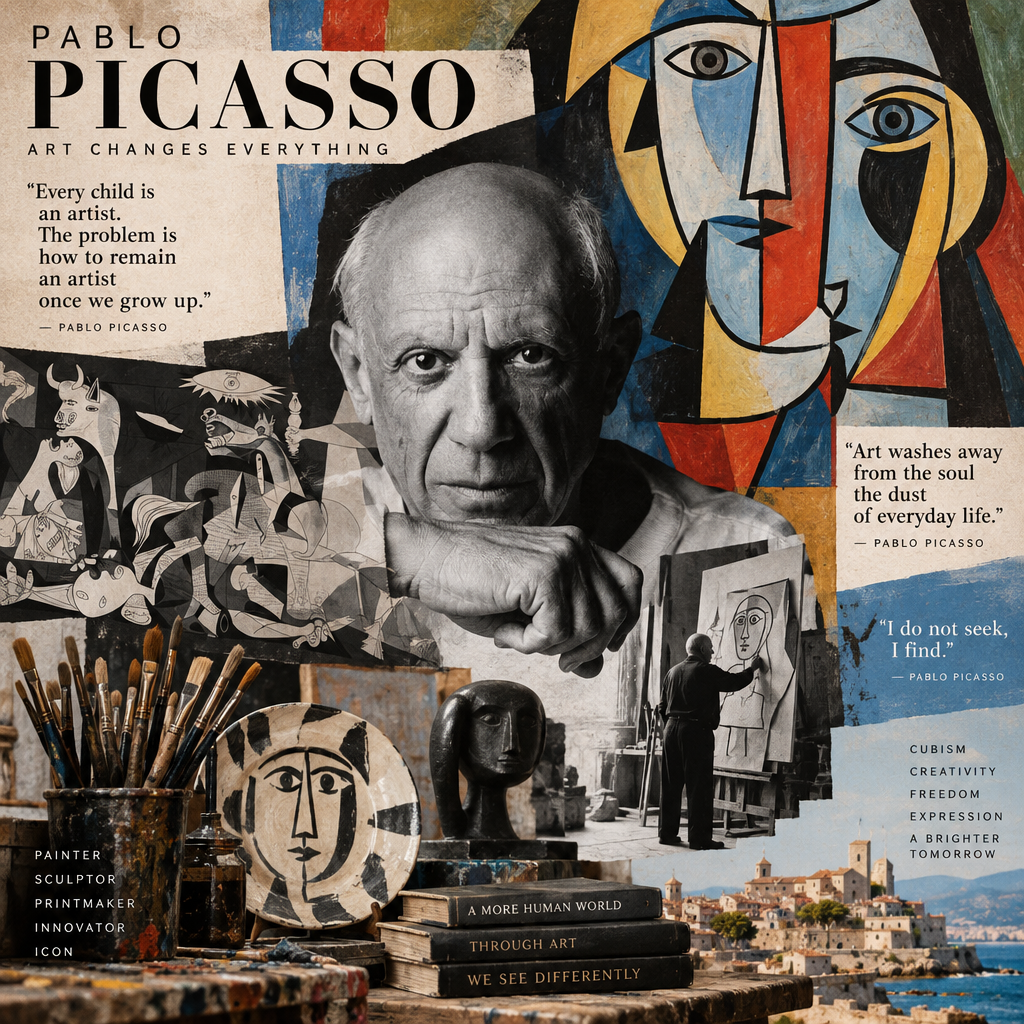
Pablo Picasso, a name synonymous with innovation and creativity, transcended the artistic norms of his time. As one of the most influential artists of the 20th century, his work and philosophies shaped the very fabric of modern art. The rich tapestry of his life is not only filled with vibrant hues but also profound reflections captured in his quotes. Delving into his biography allows us to understand the context behind his words, and how they resonate with our own experiences today.
Born in Málaga, Spain, on October 25, 1881, Pablo Picasso displayed extraordinary artistic talent from a young age. His father, an art teacher, recognized his potential and nurtured his abilities. By the age of nine, Picasso had already completed his first painting, a talent that would blossom and evolve into a multifaceted career.
Picasso’s life was marked by numerous transitions, mirroring the phases of his art. His Blue Period, characterized by somber colors and themes of despair, reflected his own emotional struggles. The subsequent Rose Period introduced warmer tones and a focus on circus performers, signifying a shift towards optimism. This transformation was not merely a stylistic choice; it mirrored Picasso’s own experiences and emotions—a reminder that art is often a reflection of the soul.
As he moved to Paris, Picasso became immersed in the vibrant artistic community, forging friendships with other greats such as Henri Matisse and Gertrude Stein. His relentless pursuit of artistic innovation led him to co-found the Cubist movement, which challenged traditional perspectives and transformed how we perceive reality. Through his varied styles, Picasso spoke to the complexities of human existence, a theme that resonates deeply with many of his quotes.
One of Picasso’s most famous quotes, “Every act of creation is first an act of destruction,” encapsulates the essence of artistic transformation. This statement speaks volumes about the creative process, suggesting that true innovation often requires dismantling existing structures and conventions. It encourages us to embrace change and view challenges as opportunities for growth, a reflection of Picasso’s own journey in breaking artistic boundaries.
Another poignant quote, “Art is the lie that enables us to realize the truth,” invites us to consider the paradox of art. Here, Picasso suggests that through the imaginative lens of creativity, we can uncover deeper truths about ourselves and the world around us. His art often conveyed complex emotions and societal commentary, urging viewers to see beyond the surface. This quote encourages us not to shy away from the uncomfortable truths we encounter in our lives but to explore them through our own unique expressions.
As we examine Picasso’s life and the meaning behind his quotes, we see a man who lived unapologetically. His words inspire us to embrace our individuality and pursue our passions, no matter how unconventional they may seem.
Picasso’s influence extends far beyond the canvas, impacting generations of artists, thinkers, and dreamers. His innovative approaches to form, color, and perspective have paved the way for countless artistic movements. Even today, the echoes of his creativity can be found in contemporary art, design, and culture.
Beyond the technical aspects of his work, Picasso’s legacy is deeply rooted in his ability to challenge societal norms. He was not just an artist but a revolutionary figure who used his platform to address political and social issues, most notably through his powerful painting, “Guernica.” This piece serves as a haunting reminder of the horrors of war and the human capacity for resilience.
In understanding Picasso’s life and the meaning behind his quotes, we are reminded that creativity is a journey, one that requires courage and the willingness to explore new horizons. His life teaches us that our struggles can fuel our passions, and that every moment of destruction can lead to the birth of something beautiful.
As we reflect on the life of Pablo Picasso and the wisdom embedded within his quotes, let us remember that art, in all its forms, is a powerful tool for self-expression. Picasso’s journey encourages us to embrace our own creative endeavors, to find beauty in the chaos, and to see every challenge as a stepping stone towards personal growth.
In a world that often seeks conformity, Picasso’s legacy reminds us to celebrate our uniqueness and to create fearlessly. Let us take his words to heart and allow them to inspire us in our own artistic pursuits, knowing that, just like Picasso, we too can leave an indelible mark on the world.