
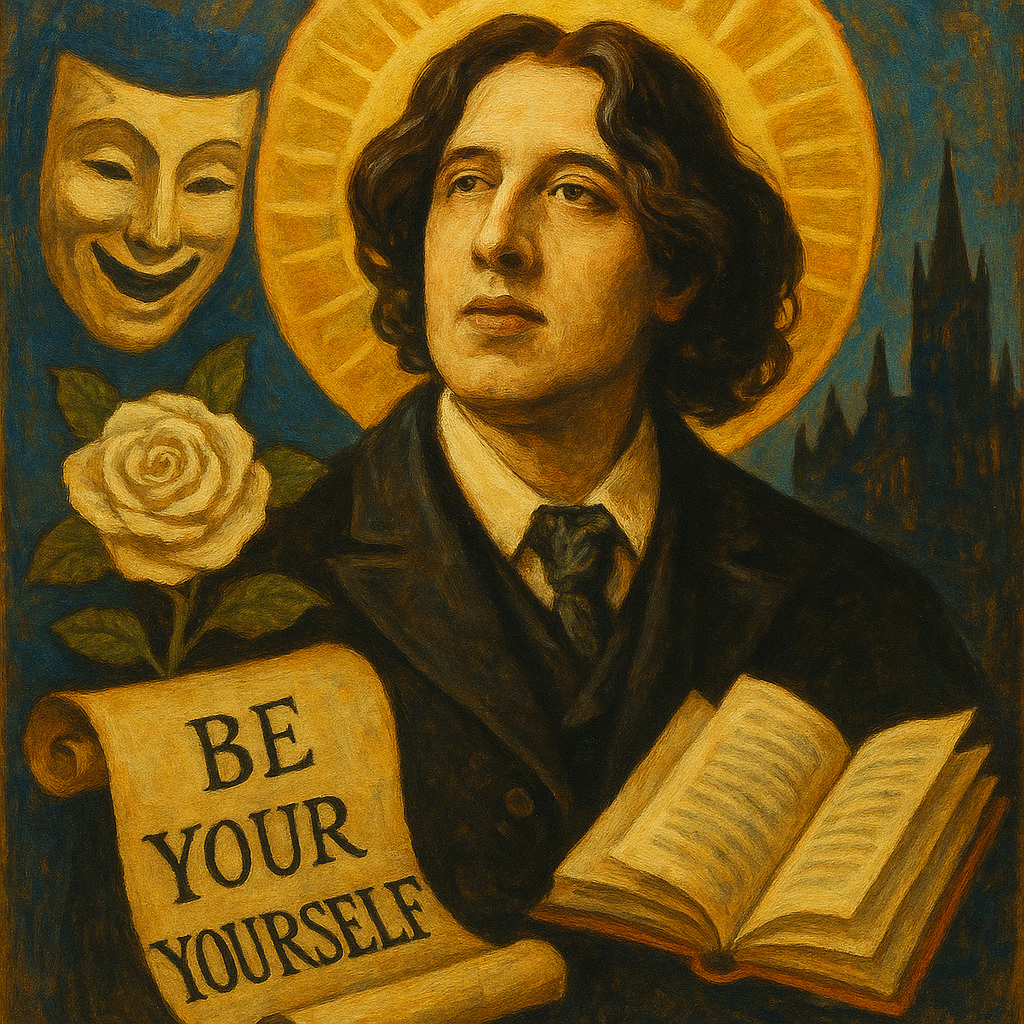
Oscar Wilde, a name synonymous with wit, beauty, and tragic brilliance, stands as one of literature’s most compelling figures. Born on October 16, 1854, in Dublin, Ireland, Wilde’s life story reads like a novel in itself, replete with triumph, scandal, and an enduring quest for beauty and truth. As we delve into the life of Oscar Wilde, we will explore the meaning of his quotes and the legacy he left behind, which continues to inspire and provoke thought in our contemporary world.
Oscar Wilde was born into a well-to-do family; his father was a prominent surgeon and his mother a successful novelist. This privileged upbringing exposed him to a world of literature and art from a young age. Educated at Trinity College Dublin and Magdalen College, Oxford, Wilde quickly emerged as a brilliant student, showcasing not just intelligence but also a flair for eloquence and performance.
Wilde’s early career saw him embrace the Aesthetic Movement, which championed “art for art’s sake.” His first major work, “The Happy Prince and Other Tales,” captured the hearts of readers with its poignant narratives and moral truths. However, it was his plays, including the famous “The Importance of Being Earnest,” that solidified his place in the pantheon of literary greats. Wilde’s sharp wit and ability to dissect societal norms through humor made him a beloved figure in Victorian society.
Yet, as fame and fortune enveloped him, personal struggles loomed large. His marriage to Constance Lloyd produced three children, but Wilde’s passions lay beyond the conventional. His affair with Lord Alfred Douglas led to a scandal that culminated in his arrest on charges of “gross indecency.” In 1895, Wilde was sentenced to two years of hard labor, a punishment that would shatter his health and spirit. Upon his release, he lived in exile in France, where he wrote “The Ballad of Reading Gaol” before succumbing to illness on November 30, 1900.
Oscar Wilde’s quotes resonate not just for their cleverness, but for their profound insights into human nature and societal constructs. One of his most famous quotations, “Be yourself; everyone else is already taken,” is a powerful reminder of the importance of authenticity in a world rife with conformity. This quote encapsulates Wilde’s lifelong struggle against societal expectations. He was a man who lived boldly, often at great personal cost, and urged others to embrace their individuality.
Another of his notable quotes, “The only way to get rid of a temptation is to yield to it,” speaks to the complexities of desire and moral judgment. Here, Wilde exhibits his characteristic blend of humor and philosophical depth; he acknowledges the futility of resisting temptations while highlighting the human inclination toward indulgence. It’s a paradox that many grapple with, rendering the quote both relatable and thought-provoking.
Wilde’s words challenge us to confront our desires, question societal norms, and embrace the totality of human experience. His quotes serve as both mirrors and windows—reflecting our innermost thoughts while also revealing broader truths about the human condition.
Oscar Wilde’s influence extends far beyond the pages of his plays and novels. He was not just a master of language but a pioneer of ideas that challenged the repressive norms of his time. His exploration of identity, morality, and the nature of love remains relevant today, particularly in discussions surrounding LGBTQ+ rights and the quest for self-acceptance.
Wilde’s legacy is seen in the works of countless writers, artists, and thinkers who followed in his footsteps. His daring approach to life and art inspired the Modernist movement and continues to serve as a beacon for those who dare to defy conventions. The wit, charm, and depth of his writing resonate with audiences globally, making his quotes timeless treasures that provoke laughter, reflection, and inspiration.
Even in contemporary culture, Wilde’s influence persists. From films to theater adaptations, his stories are reimagined and celebrated, ensuring that the spirit of his work lives on. His life serves as a reminder of the power of creativity and the cost of societal rejection, urging us to appreciate beauty in all its forms.
In reflecting on the life and work of Oscar Wilde, one is struck by the beauty of his voice—an eloquent blend of humor and profound insight. His quotes continue to inspire and challenge us to embrace our true selves, confront our desires, and recognize the complexities of our shared humanity. Wilde’s legacy is not merely that of a playwright or poet; it is that of a visionary who beckons us to live authentically, to question norms, and to pursue beauty in a world that often seems devoid of it.
As we ponder his words and witness the enduring influence of his life, let us carry forward the spirit of Oscar Wilde: to love, to laugh, and to live fully in the glorious, messy tapestry of existence.