
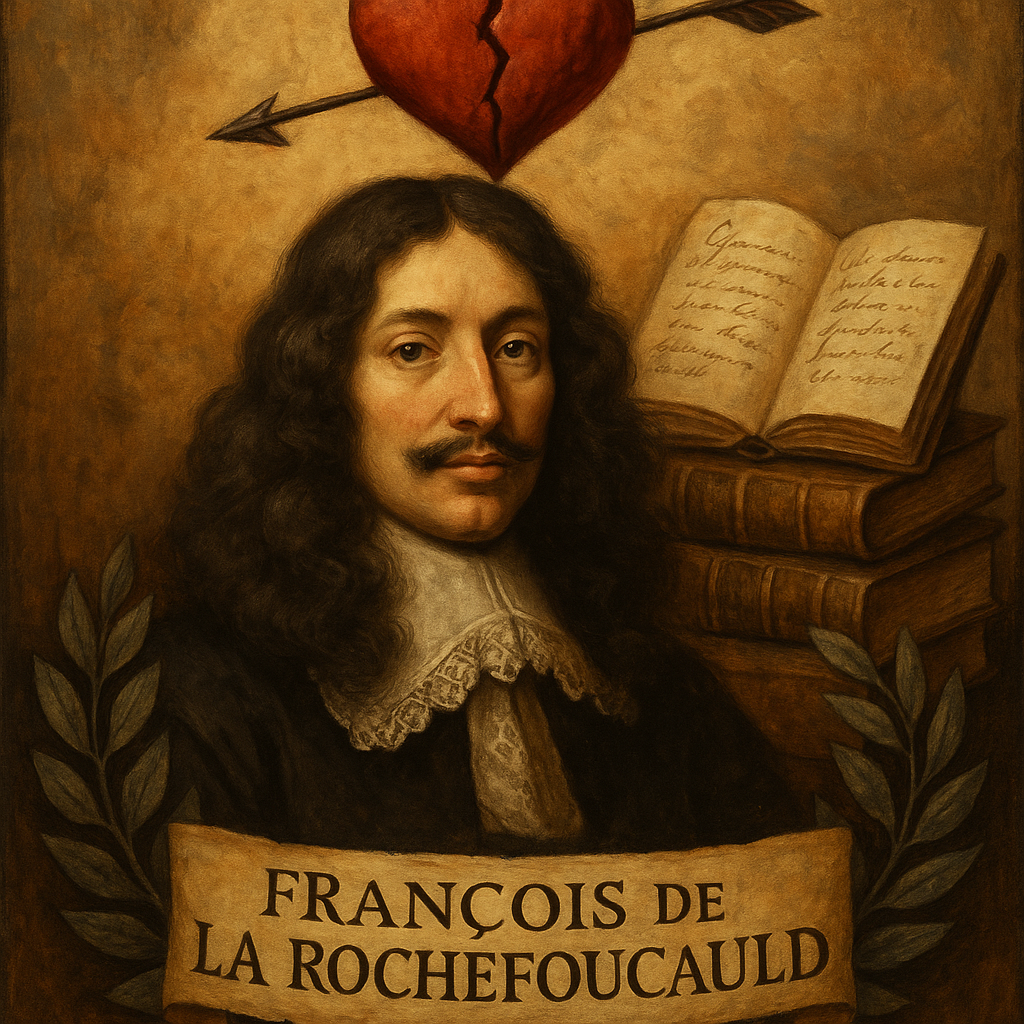
In the realm of literature and philosophy, few figures stand as distinctly as Francois de La Rochefoucauld. A man of sharp wit and sharp observation, La Rochefoucauld captured the nuances of human behavior in a series of poignant maxims that resonate to this day. His life, woven with experiences of privilege, war, and personal reflection, offers a backdrop against which his impactful quotes shine with even greater clarity.
Born on September 15, 1613, in Paris, Francois de La Rochefoucauld came from an aristocratic family, a background that afforded him both privilege and exposure to the complexities of human nature. His early life was marked by the turbulence of the Thirty Years’ War and the Fronde, a series of civil wars in France. These experiences deeply influenced his worldview, prompting him to delve into the interplay of self-interest and human emotion.
Educated in the tradition of the Jesuits, La Rochefoucauld cultivated a love for literature and philosophy early on. Yet, despite his noble lineage, he chose a life that often found him at odds with the entrenched structures of power and privilege. His time as a soldier, and later as a courtier, provided him with a front-row seat to the theater of human ambition and folly, which became the lifeblood of his writing.
La Rochefoucauld’s most significant work, “Réflexions ou sentences et maximes morales,” published in 1665, encapsulates his observations about life, love, and the nature of man. It is a collection of aphorisms that distill complex emotions into sharp, memorable phrases. The brevity of his words packs a punch, relying on the reader to reflect deeply on the meaning behind them.
Francois de La Rochefoucauld was a master of succinct wisdom. His ability to convey profound truths about human nature in just a few words is part of what makes his quotes so impactful. One of his most well-known sayings, “We all have strength enough to endure the troubles of others,” highlights the often self-serving nature of empathy. It suggests that while we may feel compassion for others, our understanding is frequently colored by our own experiences and biases.
Another powerful quote, “The only thing we never get enough of is love; and the only thing we never give enough of is love,” speaks to the paradox of human emotion. La Rochefoucauld’s keen insight reveals the innate contradictions within us: while we crave love, we often hold back our expressions of it, caught in cycles of self-protection and fear.
By distilling human interactions down to their essence, La Rochefoucauld invites us to confront our motivations and desires. His quotes serve as mirrors, reflecting our complexities and contradictions. They encourage introspection, challenging us to examine not just our actions but the underlying feelings that drive them.
Francois de La Rochefoucauld’s influence extends far beyond his own time. His aphorisms have inspired countless writers, philosophers, and thinkers, paving the way for modern explorations of psychology and human relationships. The simplicity of his language combined with the depth of his insight makes his work timeless, adaptable to various contexts and generations.
In the world of literature, La Rochefoucauld is often seen as a precursor to later existentialist thought, impacting figures such as Jean-Paul Sartre and Albert Camus. His observations about self-interest resonate through the ages, influencing modern discourses on morality and ethics. His legacy lives on in the way we understand human nature — with all its flaws, complexities, and occasional beauty.
As we reflect on the life of Francois de La Rochefoucauld, we see a man who turned personal observation into universal wisdom. His quotes, steeped in the reality of human experience, continue to provoke thought and inspire introspection.
In a world that often feels chaotic and disconnected, the words of Francois de La Rochefoucauld remind us of the shared threads of our humanity. His reflections prompt us to look beyond ourselves, to consider the motivations of others, and to cultivate a deeper understanding of our own hearts.
Let us carry his legacy forward, embracing the complexity of our emotions and striving to love and connect more fully. As La Rochefoucauld himself might have said, the beauty of life lies not in perfection, but in the rich tapestry of our experiences and relationships — a reminder that even in our flaws, we can find profound wisdom.