
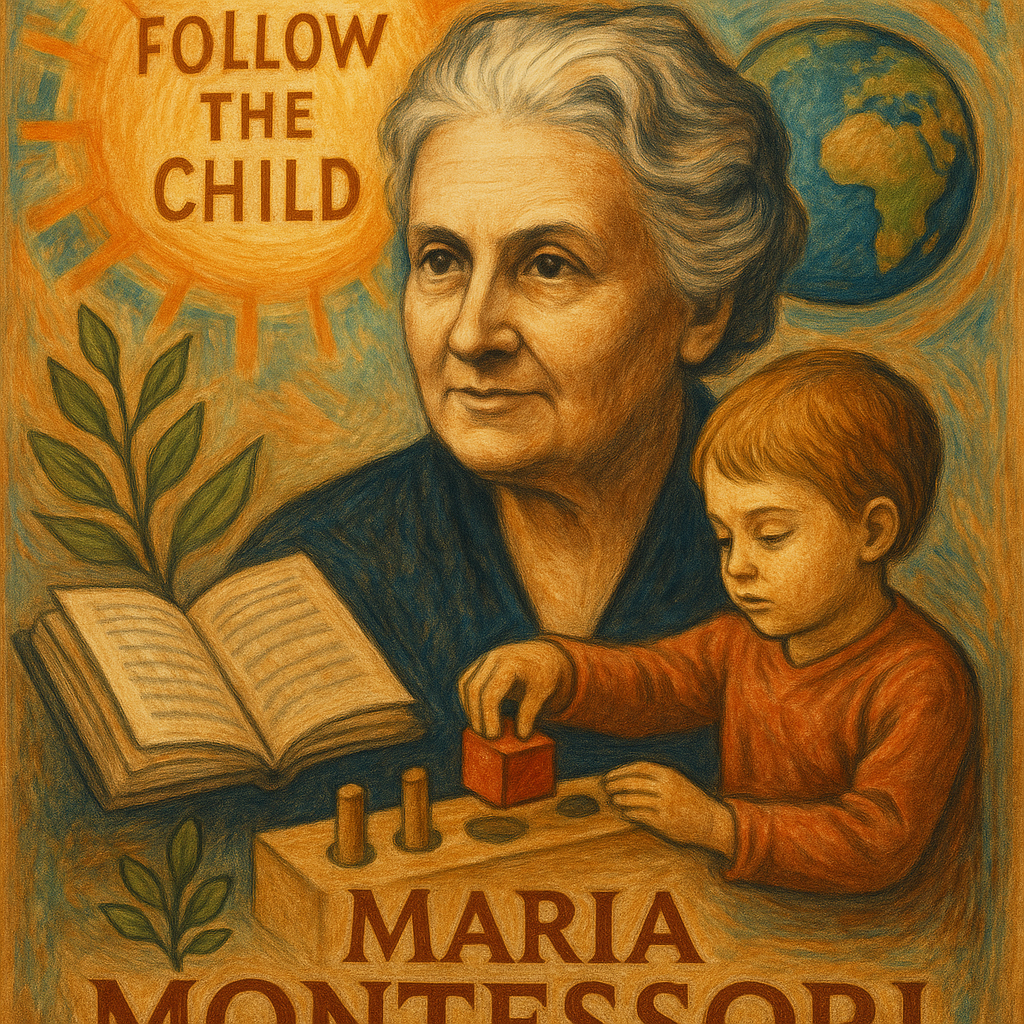
Maria Montessori was more than just an educator; she was a visionary whose life’s work transformed the landscape of early childhood education. Born on August 31, 1870, in Chiaravalle, Italy, Montessori became the first woman in Italy to graduate as a physician, paving the way for her later innovations in educational philosophy. Her journey was not always easy, but her dedication to understanding children as individuals shaped the way we perceive learning today. Through her profound quotes, Montessori highlights the essence of her approach—one that centers around respect for the child and the belief in their innate potential.
Montessori’s early career began in medicine, but her real passion lay in working with children. In 1907, she opened the first Casa dei Bambini (Children’s House) in the slums of Rome, where she applied her medical training to observe and understand the behavior of children. This was a radical shift from traditional educational practices; Montessori believed that children learn best in a prepared environment that caters to their natural curiosity and allows for self-directed exploration.
Her innovative teaching methods emphasized hands-on learning, where children engaged with materials designed to foster independence and creativity. She once said, “The greatest sign of success for a teacher is to be able to say, ‘The children are now working as if I did not exist.’” This quote reflects her belief that the ultimate goal of education is to empower children, nurturing their ability to learn and grow without constant oversight. Montessori’s work was groundbreaking, as it shifted the focus from teacher-led instruction to a more child-centered approach, one that respects the unique pace and interests of each learner.
Montessori’s quotes resonate with educators and parents alike, capturing the essence of her philosophy in just a few words. Take, for example, her powerful assertion: “Free the child’s potential, and you will transform him into the world.” This statement speaks volumes about her belief in the capabilities of children when given the right environment and support. Montessori understood that every child possesses unique strengths and abilities, yet the education system often stifles these qualities through rigid structures and expectations.
Her quotes often reflect a deep understanding of human nature and the importance of fostering independence. By saying, “It is the first duty of the educator to stir up the child’s own power of action,” she emphasizes that education should not just transmit knowledge but ignite a passion for learning. Montessori’s insights remind us that education is about nurturing curiosity and creativity, allowing children to take charge of their own learning journey.
Maria Montessori’s influence extends far beyond her lifetime. She established a method that is practiced worldwide, with schools adhering to her principles of child-led learning, respect for the individual, and nurturing of social skills. Today, thousands of Montessori schools exist, each dedicated to honoring her legacy by fostering environments where children can thrive.
Moreover, her philosophy has inspired countless educators and parents to adopt more holistic approaches to teaching. Montessori’s commitment to education as a path to personal development—both for children and teachers—is a testament to her enduring impact. Her belief that “Education is a natural process carried out by the child and is not acquired by listening to words, but by experiences in the environment” continues to guide educators in creating supportive and engaging learning environments.
Maria Montessori’s life and words remind us that education is not just about imparting knowledge; it’s about nurturing the whole child. Her innovative methods and profound insights into human development have left an indelible mark on the education system, encouraging us all to view children not merely as students but as individuals with boundless potential.
In a time where the pressures of standardized testing often overshadow the joy of learning, embracing Montessori’s teachings can inspire a more compassionate and effective approach to education. As parents, educators, or simply as individuals, we can take a leaf from her book to create environments that encourage exploration, respect individuality, and celebrate the uniqueness of every child.
Montessori’s legacy is a call to action: to free the potential within each child, and in doing so, transform the world around them. Let us carry her spirit forward, advocating for learning that respects and nurtures the child’s innate desire to explore, discover, and grow.