
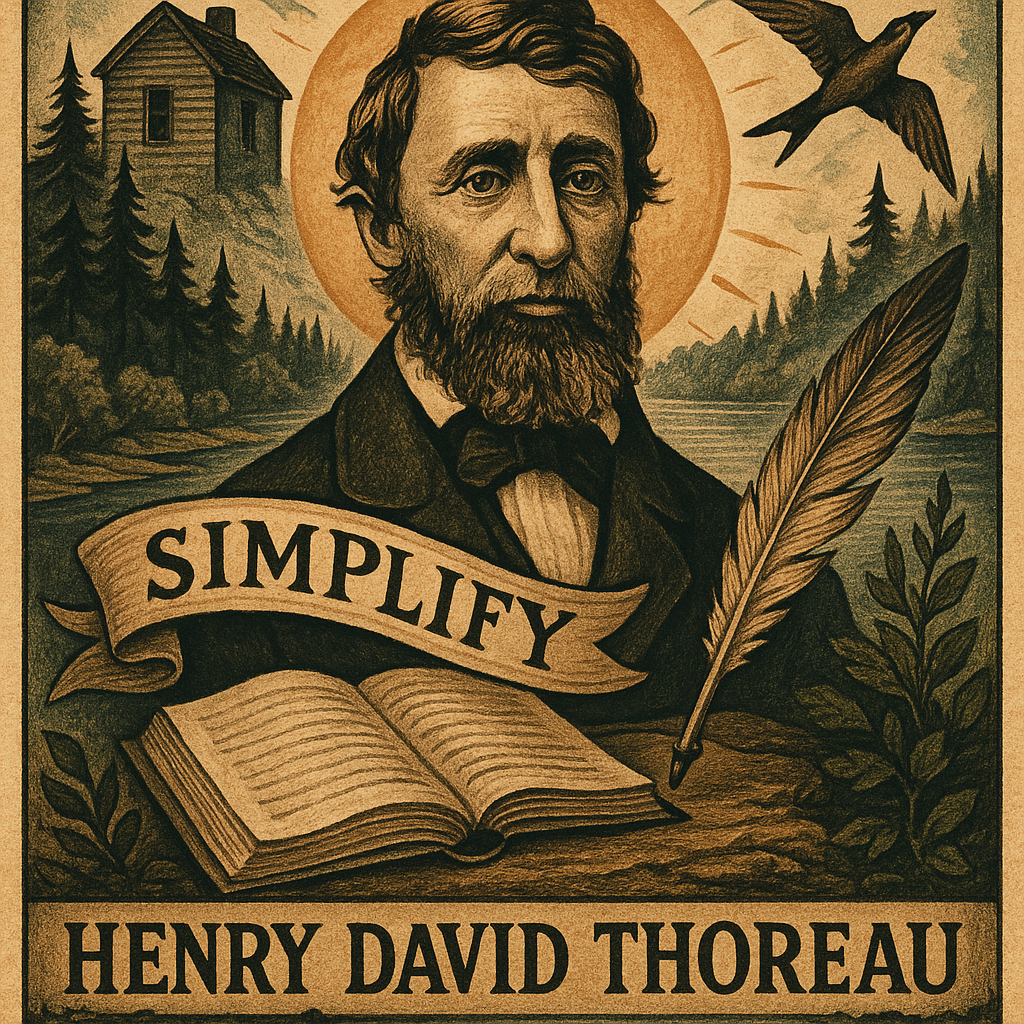
Henry David Thoreau, a name synonymous with transcendentalism and the art of living deliberately, occupies a significant place in American literature. Born on July 12, 1817, in Concord, Massachusetts, Thoreau was a philosopher, naturalist, and writer whose life and works continue to inspire generations. Thoreau’s quotes resonate deeply, often reflecting his profound views on nature, individuality, and the human experience. In this post, we will explore Thoreau’s life, the meanings behind some of his most poignant quotes, and his enduring legacy.
Henry David Thoreau was born into a modest family, the third of four children. He excelled academically, attending Harvard University, where he developed his passion for literature and philosophy. After graduation, he briefly took on various occupations, including teaching, but ultimately found his true calling in writing and contemplation of nature. Thoreau’s life took a pivotal turn when he became deeply influenced by Ralph Waldo Emerson, the leader of the transcendentalist movement. It was Emerson who encouraged Thoreau to explore his ideas about nature and self-reliance.
In 1845, Thoreau embarked on an experiment in simple living by moving to a small cabin he built near Walden Pond. This two-year sojourn would later inspire his most famous work, “Walden,” a reflection on the beauty of nature and the importance of personal introspection. Thoreau’s time in the woods was not just a retreat from society; it was a conscious decision to live deliberately, a theme that would permeate his writing.
Thoreau was also politically active, famously refusing to pay taxes in protest against slavery and the Mexican-American War. His essay “Civil Disobedience” argued for individual resistance to civil government when it conflicts with moral law. Through these experiences, Thoreau evolved into a thinker whose ideas transcended his time, advocating for both social justice and environmental conservation.
Thoreau’s quotes capture the essence of his philosophy and serve as a mirror to his thoughts on life, nature, and society. One of his most famous sayings, “The mass of men lead lives of quiet desperation,” captures the plight of those who conform to societal expectations at the expense of their own dreams. This quote invites readers to reflect on their lives, encouraging them to examine whether they are truly living or merely existing.
Another profound Thoreau quote, “Go confidently in the direction of your dreams. Live the life you have imagined,” serves as an anthem for self-empowerment. This quote emphasizes the importance of pursuing one’s aspirations and embracing the unknown. Thoreau’s belief that each individual has the power to chart their own course resonates with anyone seeking purpose and fulfillment in life.
Moreover, Thoreau’s reflection on nature is encapsulated in his quote, “In wildness is the preservation of the world.” Here, he points to the intrinsic connection between humanity and the natural world, suggesting that our survival depends on our respect for the wilderness. This perspective is increasingly relevant in today’s discussions on environmental conservation, urging society to recognize the vital role nature plays in our existence.
Henry David Thoreau’s influence extends far beyond his lifetime. His writings have inspired countless individuals, from activists to environmentalists, and his ideas have permeated various movements. The transcendentalist principles he championed helped shape American culture, inspiring movements such as civil rights and environmentalism. Figures like Martin Luther King Jr. and Mahatma Gandhi drew from Thoreau’s notions of civil disobedience, demonstrating the power of peaceful resistance in the pursuit of justice.
In literature, Thoreau’s style and themes have left an indelible mark on writers and poets. His ability to weave philosophical inquiry with rich descriptions of nature has influenced contemporary nature writers and environmental advocates. Today, the plight of our environment resonates with Thoreau’s warning against the dangers of industrialization and disconnection from nature.
Thoreau’s legacy is also evident in modern discussions around mindfulness and intentional living. His emphasis on simplicity and authenticity encourages individuals to seek deeper connections with themselves and the world around them. In a fast-paced, consumer-driven society, Thoreau’s teachings remind us of the importance of slowing down, appreciating life’s small wonders, and nurturing our inner selves.
In reflecting on the life and words of Henry David Thoreau, we find a timeless call to live authentically, to engage with nature, and to pursue our true passions. His quotes serve as guiding lights, urging us not only to question the status quo but also to embrace the beauty of the individual journey. As we navigate our own lives, let us remember Thoreau’s wisdom: to live deliberately, to seek out the wildness that preserves our world, and to go confidently in the direction of our dreams. In doing so, we honor the legacy of a man who dared to live fully and inspire others to do the same.