
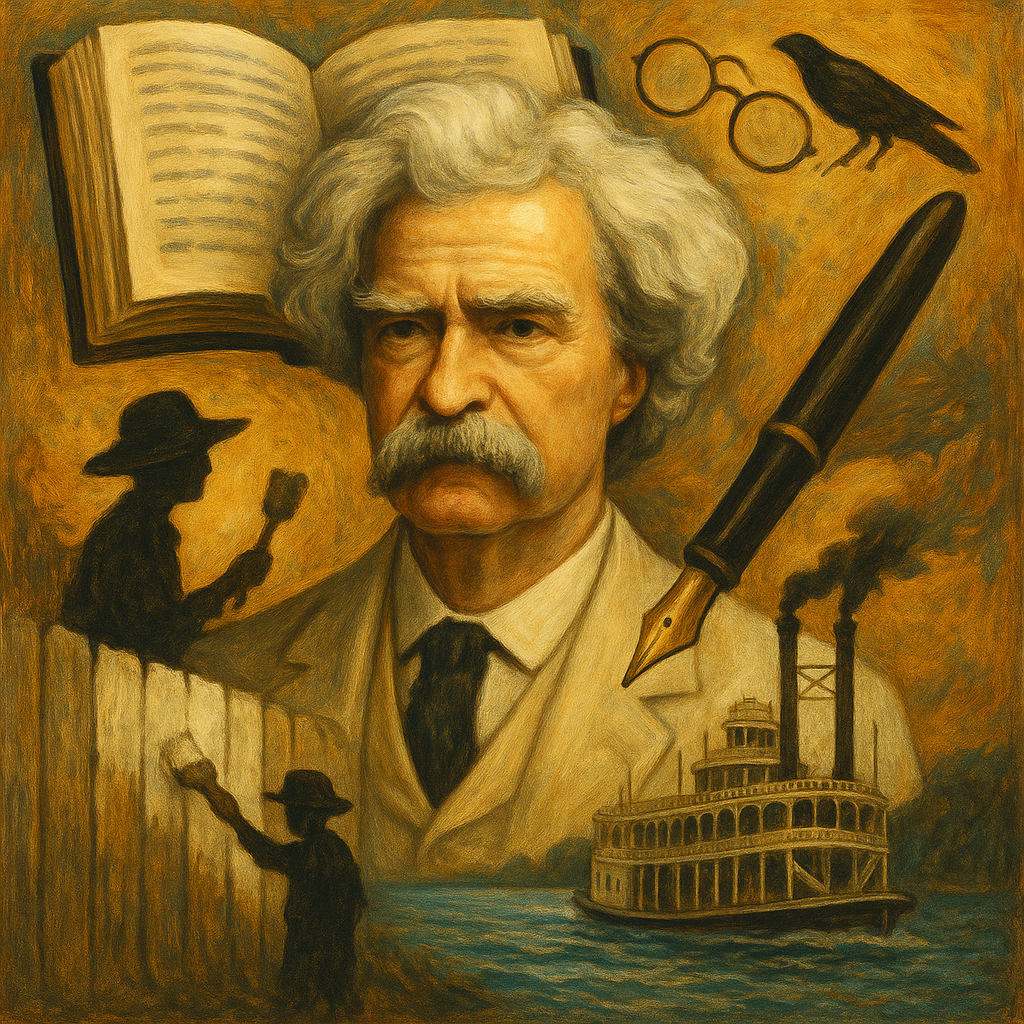
Mark Twain, born Samuel Langhorne Clemens in 1835, remains one of America’s most beloved and influential authors. With a sharp wit and a keen understanding of human nature, Twain’s literary contributions have shaped the landscape of American literature. His timeless quotes resonate with readers, holding profound meanings that reflect his life experiences and the societal issues of his time. In this post, we will explore Mark Twain’s fascinating biography, delve into the meanings behind some of his most memorable quotes, and examine his enduring legacy.
Mark Twain was born in Florida, Missouri, and he spent much of his childhood in Hannibal, a small town on the Mississippi River. This riverside town and its diverse inhabitants would later inspire many of his works. Twain’s early life was marked by both hardship and adventure; his father’s death when Twain was just 11 years old forced him to leave school and work as a printer’s apprentice. This early exposure to the written word laid the foundation for his future career.
In his late teens, Twain worked as a riverboat pilot on the Mississippi, and it was during this time that he adopted the pen name “Mark Twain,” a term used in river navigation meaning “two fathoms deep.” The river, a symbol of freedom and exploration, would play a critical role in shaping his literary voice. Twain’s experiences on the river provided rich material for his writing, most notably in classics such as “The Adventures of Tom Sawyer” and “Adventures of Huckleberry Finn,” where he explored themes of adventure, race, and societal injustice.
Twain’s life was replete with ups and downs, including financial struggles and personal tragedies. Despite these challenges, he remained a keen observer of human behavior and a brilliant satirist. His works not only entertain but also provoke thought and reflection on morality, truth, and the complexities of society.
Mark Twain quotes have become a treasure trove of insight and wisdom, often reflecting his unique perspective on life. One of his most famous quotes, “The secret of getting ahead is getting started,” encapsulates Twain’s belief in action and perseverance. This quote serves as a motivational reminder that the first step is often the hardest, and taking the initiative is crucial to achieving one’s goals. Twain himself faced numerous setbacks; yet, it was his relentless pursuit of writing that ultimately led to his success.
Another powerful quote from Twain is, “The man who does not read has no advantage over the man who cannot read.” This statement highlights the importance of education and the value of knowledge. Twain was an advocate for learning and often emphasized how reading could transform lives. His own thirst for knowledge was evident throughout his life, as he explored various subjects, from science to philosophy, embedding this knowledge in his writings.
Twain’s humor and sharp criticism of society are encapsulated in lines like, “Whenever you find yourself on the side of the majority, it is time to pause and reflect.” This quote challenges the reader to question societal norms and think independently. Twain was not afraid to confront controversial issues, such as racism and social injustice, through his storytelling. His ability to weave humor with profound commentary has made his quotes resonate through generations.
Mark Twain’s influence extends far beyond his literary achievements. He was a pioneer of American literature, introducing a distinct voice that celebrated American culture while simultaneously critiquing it. His works, rich in regional dialects and humor, laid the groundwork for future authors to explore unique cultural narratives.
Twain’s legacy lives on through his works that continue to inspire readers and writers alike. Schools worldwide teach his novels, and his quotes are often cited in discussions about ethics, education, and the human experience. Twain’s keen insights into human nature remain relevant, encouraging us to reflect on our actions and the world around us.
In addition to his literary contributions, Twain’s life also serves as a testament to resilience. He faced significant obstacles, including financial ruin and personal loss, yet he continued to write and engage with the world. His ability to find humor in adversity and his commitment to social justice are qualities that resonate with audiences today.
Mark Twain’s journey from the banks of the Mississippi to literary acclaim is a powerful reminder of the impact one individual can have on society. Through his quotes, we find inspiration to confront challenges, embrace knowledge, and think critically about the world we inhabit. As Twain himself said, “The best way to cheer yourself up is to try to cheer somebody else up.” His legacy encourages us to look beyond ourselves and contribute positively to the world, a timeless lesson that continues to inspire generations. Mark Twain’s voice, rich in its humor and wisdom, will undoubtedly echo through the ages, inviting us all to embark on our own literary and life adventures.