
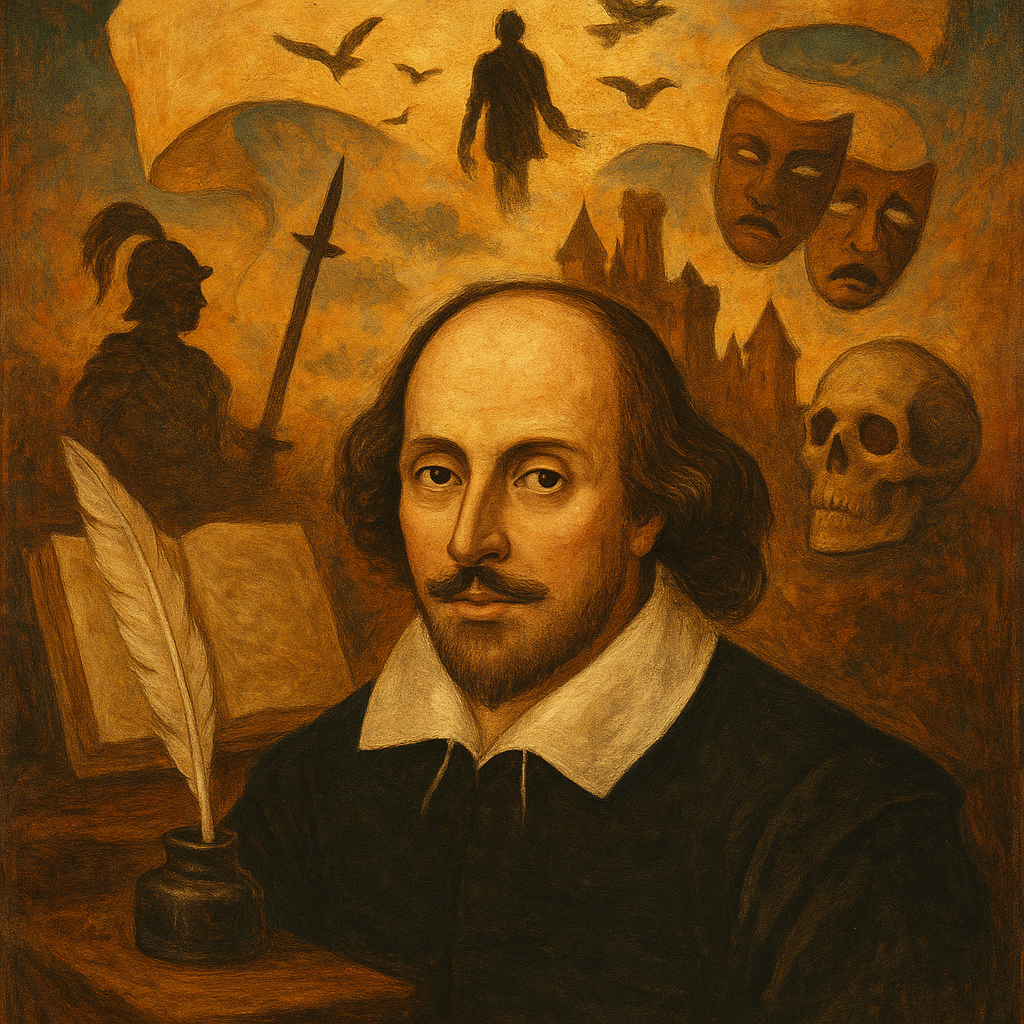
William Shakespeare is more than just a name; he is a literary titan whose influence has permeated not only the world of literature but also the very fabric of life itself. Often hailed as the Bard of Avon, Shakespeare’s works are a blend of profound insight, human emotion, and timeless wisdom. He lived during the late 16th and early 17th centuries—a time when the Renaissance was blooming, and the English language was evolving. Let us journey through the life of Shakespeare, explore the meaning behind some of his most famous quotes, and understand the legacy he left behind.
William Shakespeare was born in April 1564 in Stratford-upon-Avon, England. Little is definitively known about his early life, but he was the third of eight children born to John Shakespeare, a glove maker, and Mary Arden, a prosperous landowner’s daughter. This modest yet fulfilling upbringing likely instilled in him a deep appreciation for both the arts and the complexities of human experience.
Shakespeare married Anne Hathaway in 1582 when he was just 18 years old. The couple had three children, and while Shakespeare eventually moved to London to pursue his career in the theater, he maintained close ties with his family. The period known as the “Lost Years” (1585-1592) of his life remains shrouded in mystery; however, his arrival in London coincided with the burgeoning popularity of theater, which would soon catapult him into the limelight.
By the late 1590s, Shakespeare had established himself as a playwright and actor. His prolific career spanned over two decades, during which he penned 39 plays, 154 sonnets, and several narrative poems. Shakespeare’s ability to capture the depths of human emotion—love, jealousy, ambition, and despair—resonated deeply with audiences and continues to do so today. His command of the English language transformed the way we use words, gifting the world with expressions and idioms that remain in use.
Shakespeare’s quotes are not mere words; they are reflections of his understanding of the human condition. Take, for example, the line, “To be, or not to be: that is the question” from *Hamlet*. This famous soliloquy embodies the existential struggle between life and death, a theme that has continued to resonate through the ages. In this quote, Shakespeare delves into the human psyche, encouraging us to confront our mortality and the choices we make in our lives.
Another poignant quote, “All the world’s a stage, and all the men and women merely players,” captures the transient nature of existence. Here, Shakespeare uses the metaphor of theater to remind us that life is but a performance, where each individual plays a unique role. This notion of life’s impermanence encourages us to embrace the present moment and recognize the shared experiences that bind us together.
Shakespeare also had a keen understanding of love, as reflected in his quote, “The course of true love never did run smooth” from *A Midsummer Night’s Dream*. This simple yet profound observation highlights the complexities of romantic relationships and the inevitable challenges that arise. Shakespeare’s words remind us that the path to love is often fraught with obstacles, yet it is these very trials that deepen our connection to one another.
William Shakespeare’s influence transcends time and geography. His works have inspired countless adaptations across various media, from films and novels to operas and ballets. His plays are performed more often than those of any other playwright, and his sonnets continue to be studied and cherished by literature enthusiasts worldwide.
Beyond the stage and page, Shakespeare’s exploration of universal themes has made his work relevant in diverse contexts. His insights into love, ambition, betrayal, and the human experience have found their way into our everyday conversations, enriching our vernacular and thought. The idioms and phrases that originated from his writings, such as “break the ice” or “heart of gold,” have seamlessly woven into the fabric of the English language.
Moreover, Shakespeare’s ability to explore the depths of human emotion has opened doors for writers and poets, establishing a legacy that encourages creativity and introspection. His works serve as a mirror reflecting our fears, hopes, and dreams, ultimately reminding us of our shared humanity.
William Shakespeare was not merely a playwright; he was a profound observer of humanity. His quotes encapsulate the complexities of life, guiding us through love, loss, and everything in between. As we reflect on his life and legacy, we find that Shakespeare’s words continue to inspire us to confront our own truths and navigate the intricate dance of existence.
In the end, Shakespeare’s ability to articulate the human experience remains unparalleled. Through his life’s work, he invites us to ponder our choices, embrace our emotions, and above all, recognize the shared journey we all undertake. As we navigate our own stories, let us carry the wisdom of Shakespeare with us, ever mindful of the beauty and complexity of life itself.