
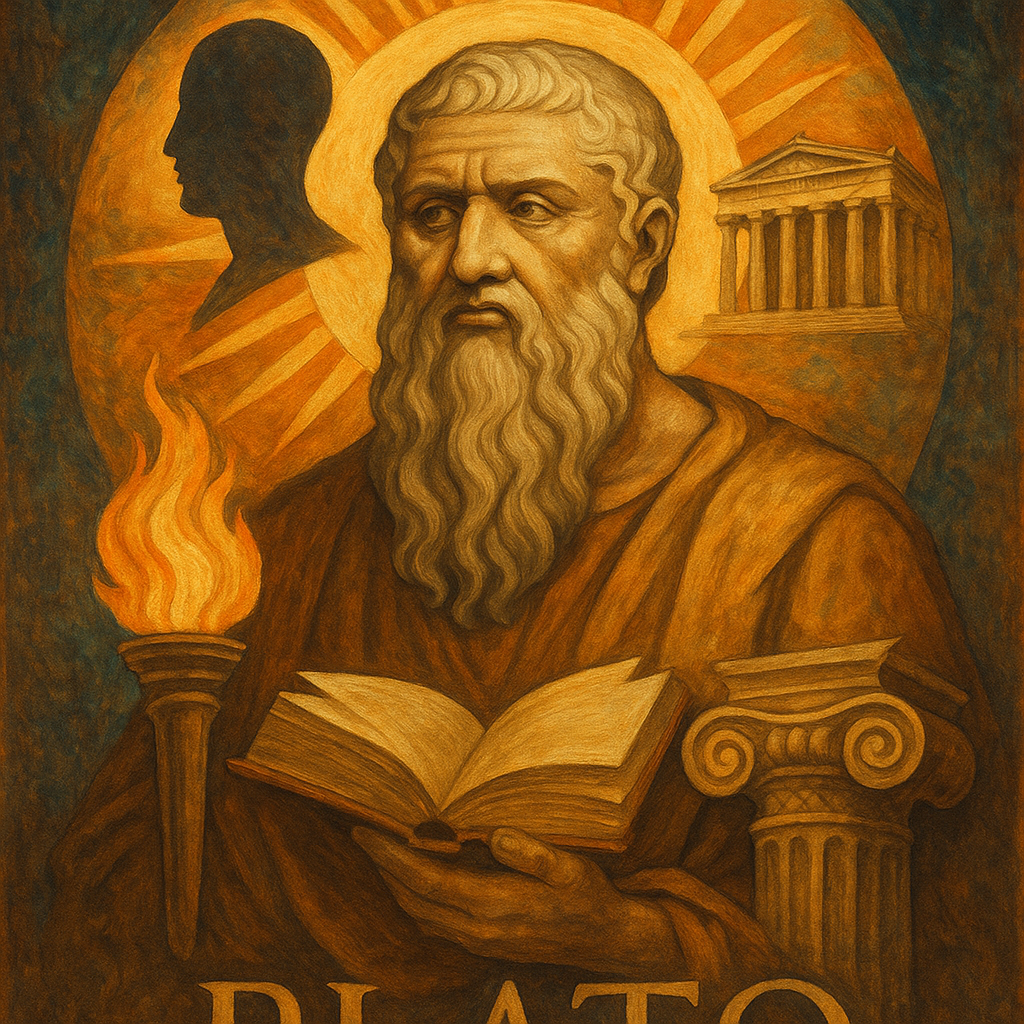
Plato, the ancient Greek philosopher whose thoughts have transcended time, invites us into a world where ideas reign supreme. Born around 427 BCE in Athens, his life was marked by a quest for truth, knowledge, and the essence of existence. Today, his quotes continue to provoke thought and inspire individuals across generations. This blog post delves into the life of Plato, explores the meaning behind some of his most profound quotes, and examines the legacy he left behind—a legacy that continues to influence contemporary thought.
Plato was born into an aristocratic family in the heart of Athens, a city throbbing with political activity and philosophical inquiry. His early life was steeped in the tumultuous events that marked the end of the Peloponnesian War and the rise of democracy in Athens. These experiences would shape his views on governance, justice, and the role of the individual within society.
After being a student of Socrates, Plato became profoundly affected by his teacher’s trial and subsequent death. Socrates’ commitment to seeking truth through dialogue inspired Plato, leading him to establish the Academy in Athens—a pioneering institution for higher learning. It is here that he sought not only to teach but to engage in critical discussions with students who would carry forth his philosophical inquiries.
Plato’s writings, primarily in the form of dialogues, covered a range of topics from ethics to politics. His well-known works, such as “The Republic,” “The Symposium,” and “Phaedrus,” reflect his deep engagement with the nature of reality and the ideal state. His allegory of the cave, for instance, illustrates his belief that most people live in a state of ignorance, mistaking shadows of reality for reality itself. This metaphor has become a cornerstone in philosophical discourse.
Plato’s quotes offer profound insights into human nature, society, and the pursuit of knowledge. One of his most famous sayings, “The greatest wealth is to live content with little,” encapsulates the essence of his philosophy of moderation and self-control. In a world often obsessed with material possessions and status, this quote invites us to reflect on the true sources of fulfillment and happiness—values he believed were essential for a just society.
Another notable quote by Plato is, “Knowledge which is acquired under compulsion obtains no hold on the mind.” This statement underscores his conviction that true learning arises from curiosity and engagement rather than coercion. It highlights the importance of fostering a love for learning, a theme that resonates in modern educational approaches which advocate for student-centered, inquiry-based learning.
Furthermore, when he said, “The measure of a man is what he does with power,” Plato touched on the ethical responsibilities that come with authority. This insight remains incredibly relevant today, as we continue to grapple with the implications of leadership and governance in our societies. His quotes not only reveal the depth of his thought but also serve as timeless reminders that challenge us to think critically about our lives and the world around us.
Plato’s influence cannot be overstated. His thoughts laid the groundwork for Western philosophy, shaping the work of countless thinkers from Aristotle to modern philosophers. His exploration of metaphysics, ethics, and politics has shaped disciplines such as political science, psychology, and education. The Socratic method, which emphasizes dialogue and questioning, remains a staple in educational environments, promoting critical thinking and discussion.
Moreover, Plato’s ideas have permeated various forms of art and literature, inspiring writers and artists throughout history. From the Renaissance to contemporary philosophical writings, his influence can be seen in the works of figures like Friedrich Nietzsche and even in popular culture. The themes of idealism, reality, and the essence of truth continue to inspire discussions on moral and societal issues.
Plato’s legacy is also evident in the continued relevance of his quotes. They serve as guiding principles, encouraging introspection and philosophical inquiry in a world often dominated by superficiality and distraction. Through his work, Plato invites us to engage not just with ideas but with the very nature of our existence.
As we reflect on the life of Plato and the meaning of his quotes, we are reminded of the philosopher’s profound commitment to seeking truth and understanding. His insights encourage us to live with purpose, question our beliefs, and strive for a deeper understanding of ourselves and the world around us. In an age where the pursuit of wisdom often takes a backseat to the hustle of everyday life, Plato’s words inspire us to pause, reflect, and engage in meaningful dialogue.
In the spirit of Plato, let us embrace the richness of ideas, remaining ever-curious and open-minded. For in the pursuit of knowledge, we uncover not only the mysteries of life but also the essence of what it means to be human. Just as Plato shaped the trajectory of philosophical thought, we too can leave our mark on the world, guided by the wisdom of those who came before us.