
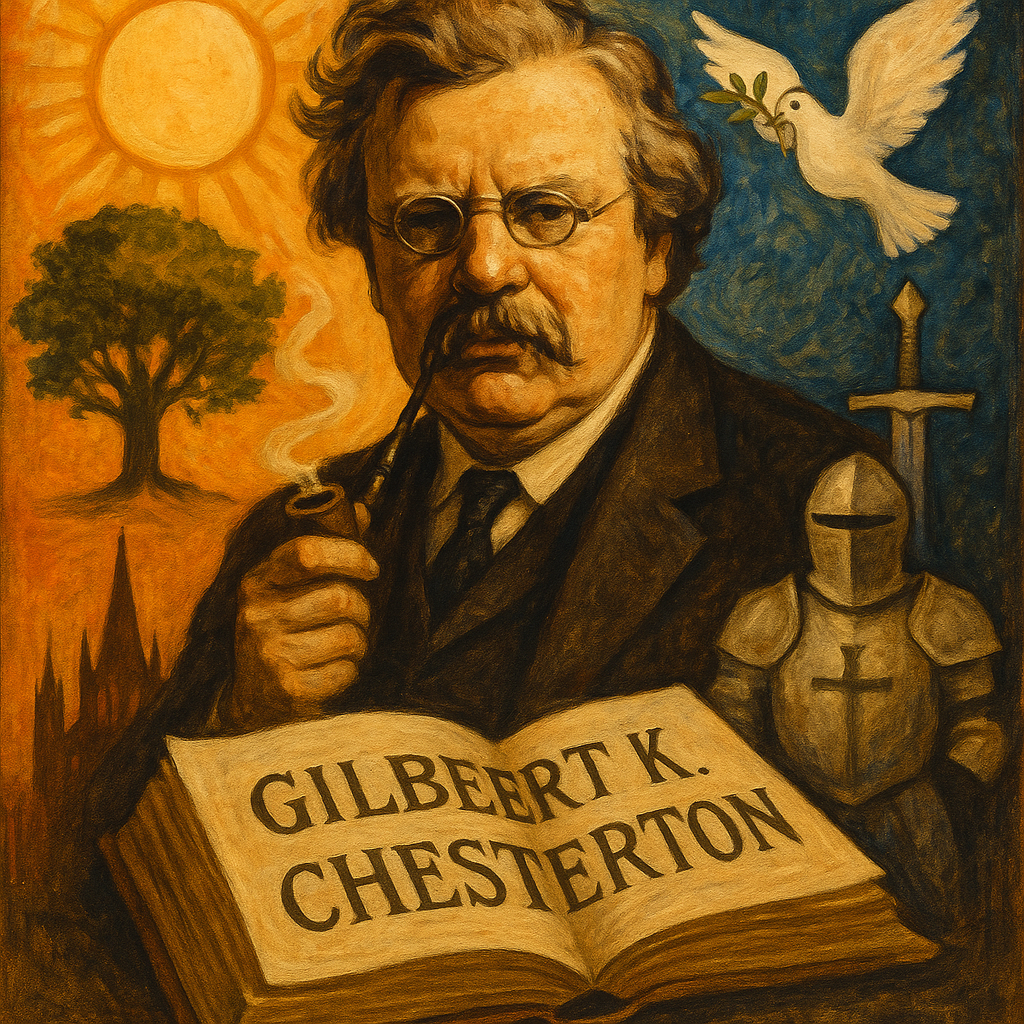
In the bustling realm of literature and philosophy, few figures stand out like Gilbert K. Chesterton. Known for his wit, charm, and profound insights, Chesterton’s life was a tapestry woven with threads of contradiction and clarity. He was a man who embraced the paradoxes of existence, a trait that is vividly reflected in his many quotes. These words resonate with readers even today, inviting exploration into their meaning and the life behind them.
Gilbert Keith Chesterton was born on May 29, 1874, in London, England. From his early years, he was a curious child, asking questions that often left adults perplexed. His education in art and literature paved the way for a career that would span across journalism, poetry, fiction, and philosophy. It was during these formative years that Chesterton developed a fascination with the mysteries of life—an interest that would dominate his writings.
His literary journey began with the publication of *The Wild Knight and Other Poems* in 1900. Chesterton quickly became known for his unique voice and engaging style, which blended humor with deep philosophical insights. Yet, it was his creation of Father Brown, a humble priest and amateur detective, in 1910 that truly set him apart as a literary force. Through this character, Chesterton explored the complexities of human nature, morality, and faith, laying the groundwork for what would become a significant influence in crime fiction.
As Chesterton’s fame grew, so did his penchant for public debate, where he championed the causes of Christianity, socialism, and a return to traditional values. His controversial opinions often sparked fiery discussions, showcasing his ability to challenge the norms of his time. Chesterton’s strong convictions and imaginative thinking solidified his legacy as a literary giant, one who could provoke thought while entertaining readers.
One of Chesterton’s most celebrated quotes is, “The aim of life is to live, and to live means to be aware, joyously, drunkenly, serenely, divinely aware.” This statement encapsulates Chesterton’s belief in the importance of living fully and being present in the moment. He understood that life is not merely about existence but about the richness of experience—embracing both the mundane and the extraordinary with open arms.
Chesterton often used humor and paradox in his writing to convey deeper truths. For instance, he once said, “The Christian ideal has not been tried and found wanting; it has been found difficult and left untried.” This quote challenges readers to reflect on their own beliefs and the societal norms surrounding them. Chesterton believed that true faith required courage and commitment, and that many people shy away from exploring its profound depths.
Through his quotes, Chesterton invites us to question our assumptions and find joy in the complexities of life. His words serve as gentle nudges, encouraging us to embrace curiosity, creativity, and the beauty of the world around us. As we delve deeper into the essence of his quotes, we begin to uncover the philosopher’s heart, a heart that sought truth and understanding amidst the chaos of life.
Gilbert K. Chesterton’s influence extends far beyond his lifetime, reaching into various fields of literature, philosophy, and even theology. His ability to weave intricate narratives with profound insights has inspired countless writers and thinkers. Notable figures, such as C.S. Lewis and J.R.R. Tolkien, acknowledged Chesterton’s impact on their work, citing his imaginative storytelling and exploration of faith as significant influences.
As we navigate through today’s world, Chesterton’s legacy continues to resonate. His emphasis on the importance of joy, wonder, and the simple pleasures of life speaks to a generation that often finds itself overwhelmed by complexity. His belief in the power of imagination encourages individuals to view the world through a lens of possibility rather than limitation.
In a time when skepticism often overshadows belief, Chesterton reminds us to embrace the mysteries of life with a childlike spirit. His words challenge us to redefine our understanding of existence, urging us to live fully and authentically.
As we reflect on the life and quotes of Gilbert K. Chesterton, we are reminded of the beauty found in exploring the paradoxes of life. His insights invite us to approach our own experiences with curiosity and wonder, encouraging a deeper understanding of ourselves and the world around us. In a society that often prioritizes efficiency over experience, Chesterton’s wisdom serves as a gentle reminder to slow down, savor life, and appreciate the richness it has to offer.
In the words of Chesterton himself, “The greatest poem is not that which is most beautifully written, but that which is most beautifully felt.” Let us, therefore, live our lives as a beautiful poem, embracing every moment with open hearts and curious minds.