
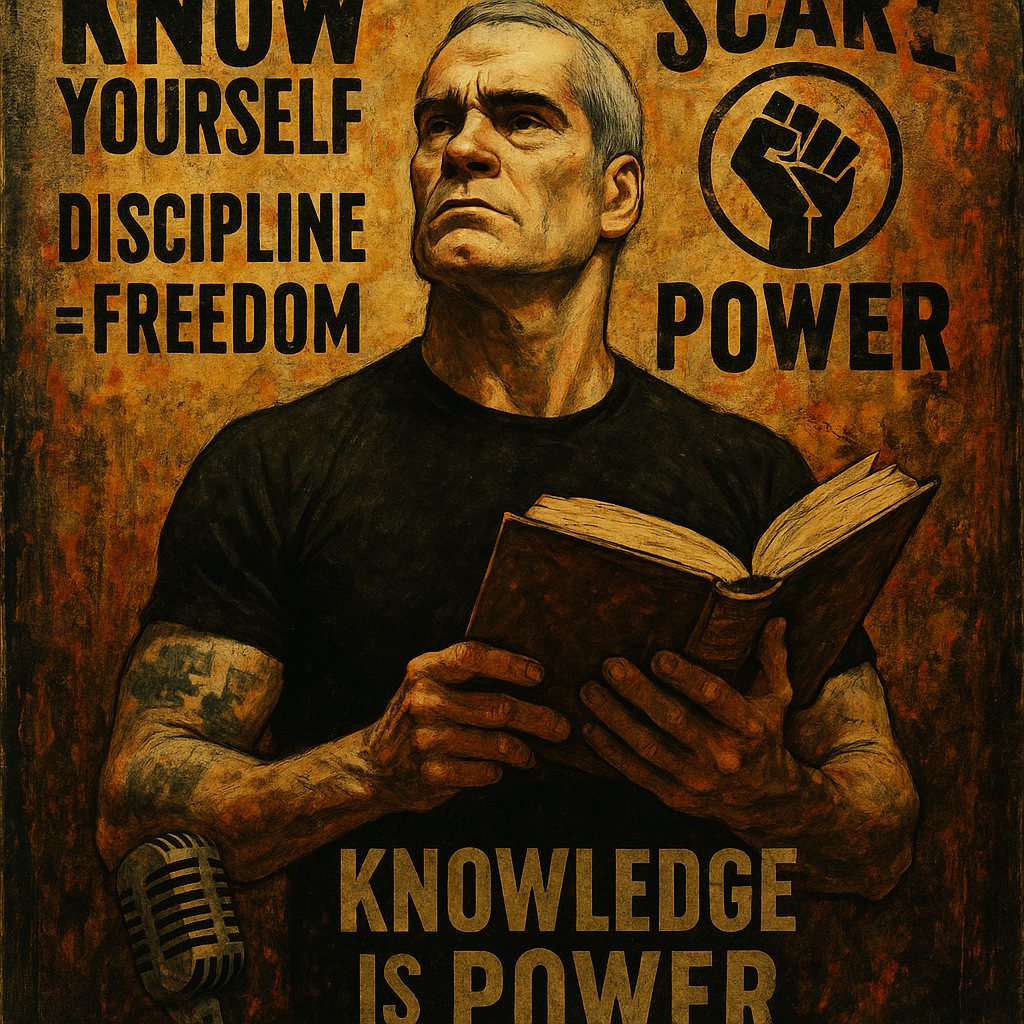
Henry Rollins has never been one to sit quietly in the corner. With a heart that beats fiercely for justice and a voice that resonates with raw honesty, he has carved out a unique space in the realms of music, spoken word, writing, and activism. Born on February 13, 1961, in Washington, D.C., Rollins has consistently used his platform to challenge societal norms and inspire others to speak their truth. In exploring the life of this dynamic figure, we uncover the essence of his powerful quotes and the profound impact he continues to have on generations.
Henry Rollins emerged in the early 1980s as the frontman of the punk band Black Flag, where he quickly became a symbol of rebellion and resilience. His energetic performances and unapologetic lyrics drew attention not just for their musicality, but for the raw emotion they conveyed. Rollins was not just a musician; he was a storyteller, a historian, and a provocateur, unafraid to confront the darker realities of life and society.
Rollins’ journey didn’t stop with music. As he transitioned into spoken word performances and writing, he maintained a fierce passion for social justice, often speaking out about issues of inequality and human rights. His travels around the world, fueled by an insatiable curiosity, further informed his perspectives and enriched his storytelling. The experiences he gained through these journeys became the foundation for many of his compelling quotes, which often reflect resilience, introspection, and a call to action.
One of Henry Rollins’ most impactful quotes encapsulates his philosophy: “The only thing that matters is the work.” This statement is a testament to his belief that action, rather than words, holds true power. It encourages individuals to focus on their passions, to toil away at their craft, and to manifest their ideas into reality. This idea resonates deeply with those who strive to make a change in their own lives or the lives of others.
Rollins’ quotes often invoke a sense of urgency, encouraging listeners and readers alike to confront their fears and embrace discomfort. For instance, he once said, “You cannot be afraid of people who are not like you.” This sentiment serves as a reminder of the importance of empathy and understanding in a world that is often polarized. His words challenge us to step outside of our comfort zones, to seek connection with those who may think differently, and to learn from our differences rather than fear them.
His quotes are not just words; they are calls to action. They invite individuals to reflect on their values and to find strength in their individuality. When Rollins encourages us to “do it for yourself,” he emphasizes the importance of self-fulfillment and authenticity. In a society that often pressures conformity, his voice stands as a beacon for those who dare to be different.
Henry Rollins’ influence extends far beyond the punk rock scene. He has become a cultural touchstone for those who embrace the arts as a means of expression and rebellion. Through his numerous books, podcasts, and public appearances, he has inspired countless individuals to pursue their passions unapologetically. His emphasis on hard work, integrity, and self-reflection resonates with audiences of all ages.
Rollins’ legacy is one of courage and authenticity. He has shown that it is possible to be both a fierce critic of society and a compassionate human being. His commitment to storytelling as a form of activism has opened doors for conversations about mental health, personal accountability, and the pursuit of one’s truth. By sharing his own struggles and triumphs, Rollins has encouraged others to do the same, fostering a sense of community and solidarity among those who feel marginalized or unheard.
As we reflect on the life and words of Henry Rollins, we find a message that transcends music and literature. His fierce determination to advocate for change inspires us to examine our own lives and the ways we can contribute to a better world. Rollins teaches us that every voice matters and that our experiences—both the beautiful and the painful—can be powerful tools for connection and change.
In a world that often feels chaotic and uncertain, we can take comfort in the truth that Rollins embodies: the power of authenticity and the importance of using our voices. So let’s heed his call—let’s do the work, embrace our differences, and always strive to speak our truths. In doing so, we not only honor Henry Rollins’ legacy but also pave the way for future generations to continue the conversation.