
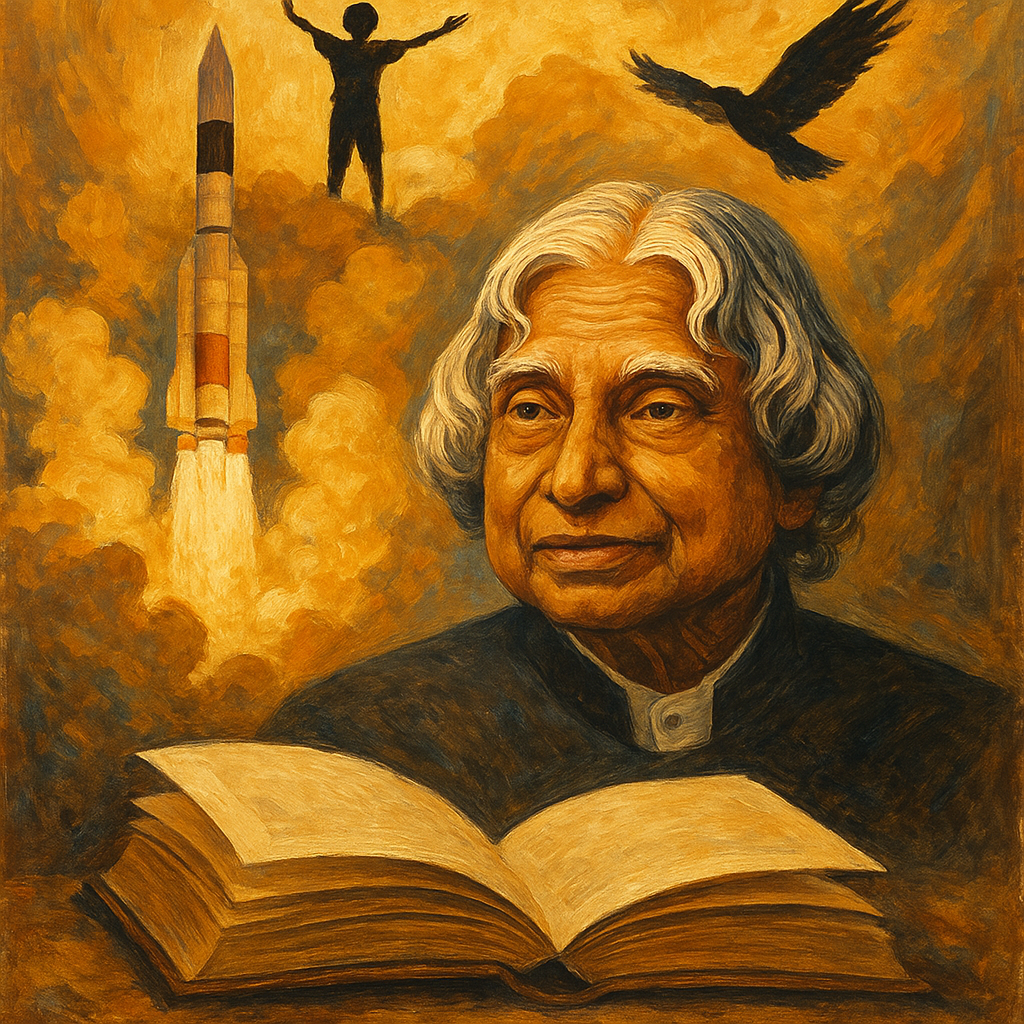
In a world often filled with the noise of cynicism and doubt, A. P. J. Abdul Kalam’s voice emerged as a beacon of hope and inspiration. Known affectionately as the “Missile Man of India,” Kalam’s life journey from humble beginnings to the highest echelons of Indian science and politics is a testament to the resilience of the human spirit. His quotes resonate deeply, encouraging us to dream big and work hard, bridging the gap between aspiration and reality. Let’s delve into the life of this extraordinary man, the meaning behind some of his most impactful quotes, and the legacy he left behind.
A. P. J. Abdul Kalam was born on October 15, 1931, in Rameswaram, a small town in Tamil Nadu, India. Coming from a modest family, his father was a boat owner and his mother a homemaker. Despite the financial hurdles, young Kalam’s parents instilled in him the values of hard work and education. This nurturing environment spurred Kalam’s innate curiosity and passion for learning.
His journey through education was anything but smooth. After completing his schooling in Rameswaram, he pursued aerospace engineering at the Madras Institute of Technology. It was during this time that he faced numerous challenges, reflecting the same grit that he would later inspire in millions. Kalam’s dedication led him to the Indian Space Research Organisation (ISRO) and eventually to the Defence Research and Development Organisation (DRDO), where he played a pivotal role in India’s space and missile programs.
Kalam’s early life experiences shaped his understanding of the importance of perseverance and dedication. These themes resonate in his quotes, such as “You have to dream before your dreams can come true,” which reflects the essence of envisioning success before taking the necessary steps to achieve it. This simple yet profound statement encourages individuals to cultivate their aspirations and recognize the potential within themselves—a guiding principle that defined his own path.
A. P. J. Abdul Kalam’s quotes are not just words; they are reflections of his life philosophy and experiences. His belief in education as a catalyst for empowerment is encapsulated in the quote, “Education is the most powerful weapon which you can use to change the world.” This statement underscores the transformative potential of knowledge, advocating for a world where education unlocks opportunities and fosters innovation.
Kalam’s wisdom often drew from his own experiences, and he shared lessons on leadership, responsibility, and the significance of dreaming big. His assertion, “If you want to shine like a sun, first burn like a sun,” speaks volumes about the sacrifices that accompany success. It encourages individuals to embrace challenges and put in the effort required to achieve their dreams. Such insights continue to inspire countless minds, resonating across generations and cultures.
Beyond motivation, Kalam’s quotes also served as calls to action. In one of his poignant reminders, he stated, “Great dreams of great dreamers are always transcended.” This not only inspires dreamers to aim high but also leaves behind a powerful legacy of striving for greater ideals. With each quote, Kalam encouraged people to push boundaries, innovate, and aspire for a better future.
A. P. J. Abdul Kalam’s influence stretches far beyond the scientific community. After serving as the 11th President of India from 2002 to 2007, he became a beloved public figure, engaging with students and aspiring leaders across the nation. His approachable demeanor and genuine interest in the youth made him a mentor to many. His belief in the transformative power of young minds is perhaps best captured in his quote: “Dream, dream, dream. Dreams transform into thoughts, and thoughts result in action.”
Kalam’s legacy is not merely confined to his contributions to science and technology. It lies in the hearts of millions who were inspired by his journey—from a small town in Tamil Nadu to the presidency of a nation. His life teaches us that irrespective of our beginnings, we can achieve greatness through hard work and dedication.
Kalam passed away on July 27, 2015, but his spirit lives on through his writings, speeches, and the countless individuals he inspired. His works, including “Wings of Fire” and “Ignited Minds,” serve as guiding lights for future generations, encouraging them to dream, believe, and act.
A. P. J. Abdul Kalam’s life and words remind us of the power of dreams and determination. His journey from a small fishing town to becoming a global icon is a narrative we can all relate to—one that encourages us to embrace our challenges and never cease to aspire. As we reflect on his quotes and their meanings, let us carry forward his legacy by nurturing our dreams and empowering others to do the same. In the end, as Kalam beautifully stated, “Let us sacrifice our today so that our children can have a better tomorrow.” May we all strive to create a future that honors this vision, inspiring the next generation to reach for the stars.