
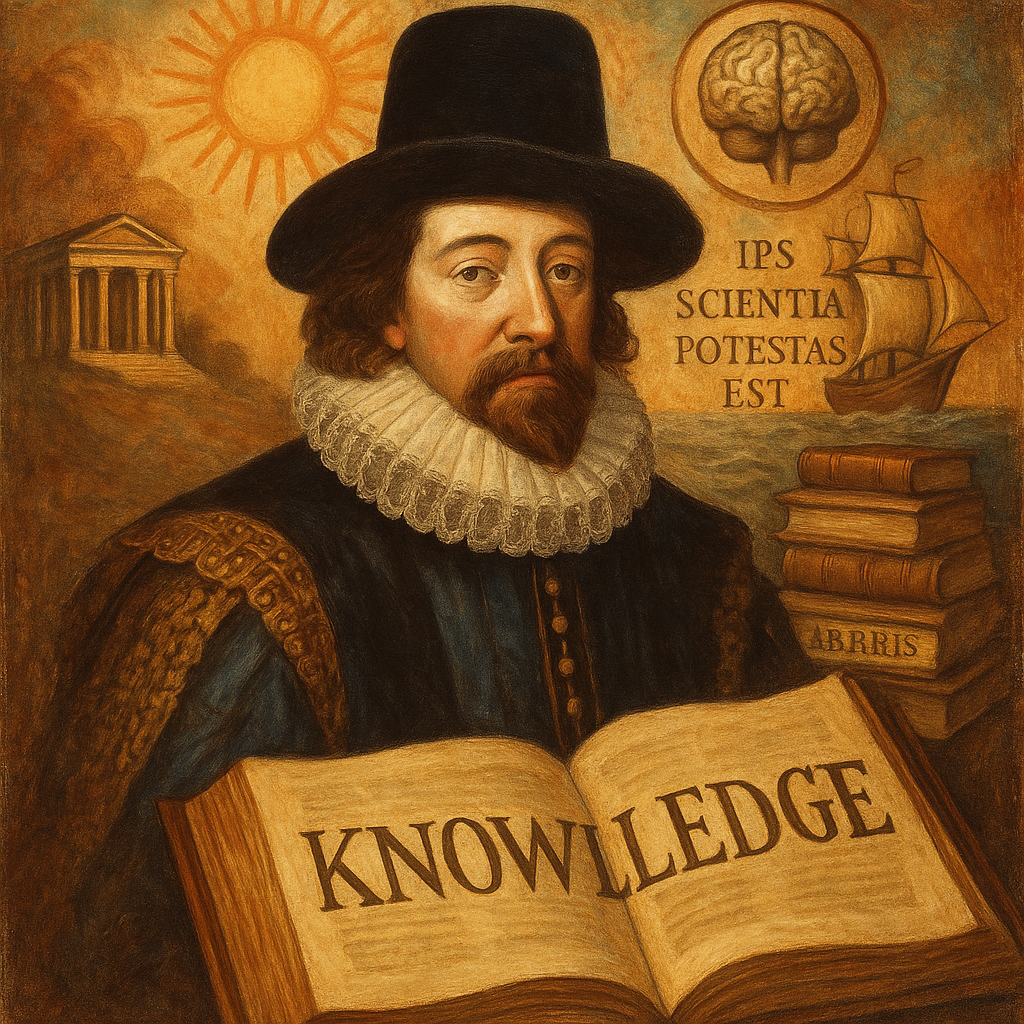
In the annals of philosophy and literature, few names resonate as profoundly as that of Francis Bacon. A polymath whose influence stretches across science, politics, and literature, Bacon’s insights have shaped our understanding of the world in ways that are both profound and practical. His eloquent quotations echo through the ages, inviting reflection and inspiration. In this blog post, we will explore the rich tapestry of Bacon’s life, unravel the meanings behind some of his most compelling quotes, and consider the legacy he left behind.
Francis Bacon was born on January 22, 1561, in London, England, into a family of influence. His father, Sir Nicholas Bacon, was a prominent lawyer and a member of Queen Elizabeth I’s council. Growing up in an environment steeped in politics and intellectual pursuit, young Bacon was exposed to the workings of the English court from an early age. This early immersion in the corridors of power would later inform his philosophical inquiries and writings.
Bacon’s formal education began at Trinity College, Cambridge, where he developed a fondness for the classical philosophers. However, it was his subsequent studies at Gray’s Inn that ignited his passion for law and politics. He quickly emerged as an articulate thinker, advocating for reform in both the legal system and the sciences. Over the years, Bacon’s career oscillated between public service and academic pursuits, culminating in his appointment as Attorney General and later as Lord Chancellor of England.
His career, however, was not without its controversies. In 1621, Bacon was accused of corruption and subsequently resigned from public office. It was during this tumultuous period that he turned his focus towards writing and philosophy, laying the groundwork for what would become an enduring influence on modern scientific thought.
Bacon’s quotes reflect his understanding of the human condition, the pursuit of knowledge, and the importance of empirical evidence. One of his most famous sayings, “Knowledge is power,” encapsulates his belief that education and information empower individuals to affect change in their lives and societies. This quote resonates deeply today, as it underscores the value of continuous learning and the pursuit of wisdom.
Another notable quote, “A wise man will make more opportunities than he finds,” speaks to the proactive nature of success and the necessity of initiative. Through this, Bacon emphasizes the importance of resilience and creativity in overcoming obstacles. It’s a reminder that waiting passively for opportunities can result in missed chances. In a world where ambition often dictates success, Bacon’s wisdom encourages us to forge our own paths.
Furthermore, Bacon’s assertion that “Truth brings light” serves as a powerful metaphor for the importance of honesty and integrity in both personal and professional realms. He believed that transparency and truthfulness were foundational to trust in any relationship—whether it be in politics, science, or personal interactions. This quote invites us to reflect on the nature of truth in our lives and the courage it takes to pursue it.
Francis Bacon’s legacy is far-reaching, influencing the realms of science, philosophy, and literature. Often referred to as the father of empiricism, he championed the scientific method, which emphasized observation and experimentation over mere speculation. His works, particularly “Novum Organum,” laid the groundwork for modern scientific inquiry, urging scholars to seek knowledge through experimentation and critical analysis.
Beyond science, Bacon’s contributions to literature and philosophy are equally significant. His essays, characterized by their aphoristic style and deep insight into human behavior, continue to be studied for their relevance and wisdom. His thoughts on human nature, ethics, and the pursuit of knowledge resonate with readers even today, showcasing his timeless relevance.
Moreover, Bacon’s work paved the way for future thinkers and scientists, including figures like Isaac Newton and Albert Einstein, who drew upon his empirical insights to shape their own groundbreaking discoveries. His influence can be seen in the very fabric of modern Western thought, bridging the gap between Renaissance humanism and the Enlightenment.
In reflecting upon the life of Francis Bacon, we are reminded of the enduring power of knowledge, the importance of integrity, and the value of initiative in shaping our destinies. His life serves as a testament to the impact one individual can have on society through inquiry, honesty, and perseverance.
As we navigate the complexities of our own lives, let us draw inspiration from Bacon’s wisdom. Let us strive to seek knowledge, create opportunities, and uphold truth in our pursuits. In doing so, we honor the legacy of a thinker who, centuries ago, illuminated the path towards understanding and enlightenment. So, in the spirit of Bacon, let us remember that knowledge is indeed power—a power that, when wielded with integrity and creativity, can transform our world.