
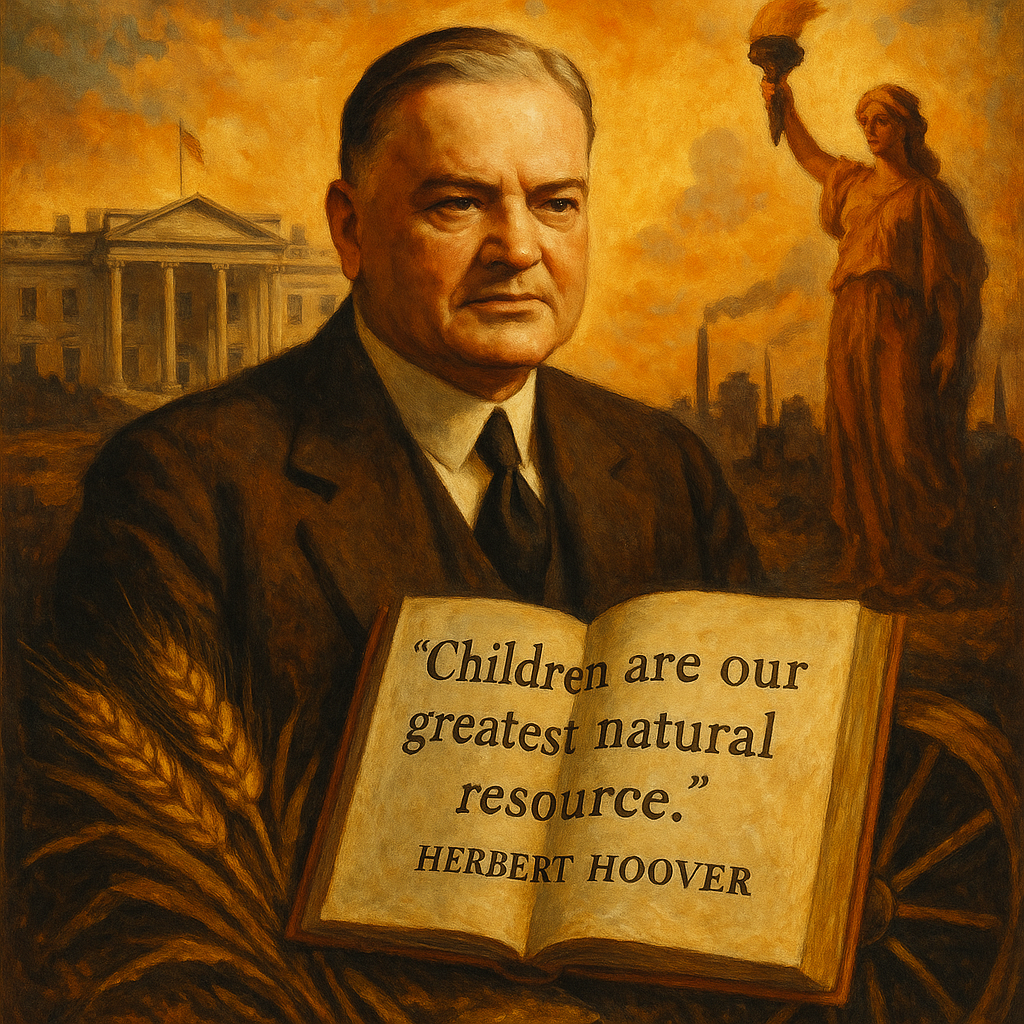
When we think of American presidents, some names shimmer brighter than others, each with a distinct narrative woven into the fabric of history. Among these figures, Herbert Hoover stands out—not just for his time in office but for his profound reflections on human resilience and community spirit. Born into modest beginnings, Hoover’s life is a tapestry of adventure, ambition, and the undeniable impact he had on society. His words continue to resonate, providing timeless insights into perseverance and hope.
Herbert Clark Hoover was born on August 10, 1874, in West Branch, Iowa, to a Quaker family. His early life was marked by loss; his father passed away when Hoover was just six years old, leaving his mother to raise him and his siblings in a small town. Despite these challenges, Hoover’s intellect and tenacity shone through. He pursued education with vigor, eventually earning a degree in geology from Stanford University.
Before his presidency, Hoover was a successful mining engineer and businessman. He traveled the world, witnessing the impact of world events firsthand. His experiences in Europe during and after World War I highlighted his commitment to humanitarian efforts, leading the American Relief Administration to provide aid to millions suffering from famine. This foundational work not only shaped his character but also laid the groundwork for his political ideology centered on community and collective responsibility.
Herbert Hoover’s quotes often reflect his life philosophy, emphasizing the importance of individual effort, social cooperation, and the resilience of the human spirit. One of his most notable quotes is, “A good many things go around in the world, but the chief one is the human spirit.”
This particular quote encapsulates Hoover’s belief in the inherent strength and capability of individuals when faced with adversity. During his presidency, which coincided with the onset of the Great Depression, Hoover advocated for self-reliance and proactive measures, believing that individuals and communities could rise above their circumstances through hard work and determination.
Yet, Hoover’s perspective was not without criticism. His insistence on volunteerism and local governance during the economic crisis was often deemed insufficient by those who sought more substantial governmental intervention. Thus, while his words exude optimism, they also invite reflection on the balance between individual effort and collective action.
While Hoover’s presidency is often overshadowed by the Great Depression, his contributions extend far beyond his time in office. His legacy is one of resilience and innovation. Post-presidency, he dedicated himself to philanthropic endeavors, founding the Hoover Institution at Stanford University, which remains a leading research center focusing on public policy and economic history.
In the grand tapestry of American history, Hoover’s influence is evident in how we perceive leadership and community responsibility. His quotes, often a blend of straightforwardness and idealism, encourage individuals to take accountability for their actions and uplift their communities. They remind us that even in the direst situations, the human spirit can prevail against the odds.
The life of Herbert Hoover is a testament to the strength of the human spirit and the importance of community. His journey from a small Iowa town to the highest office in the land serves as an inspiration, proving that one’s beginnings do not dictate one’s destiny. As we reflect on his legacy, we are encouraged to embrace his wisdom: the belief that through individual effort and collective action, we can navigate the complexities of life.
In a world that often feels divided and uncertain, Hoover’s words remind us to harness our resilience and work together for a brighter tomorrow. After all, it is through the spirit of humanity that we can truly rise above our challenges and create lasting change.