
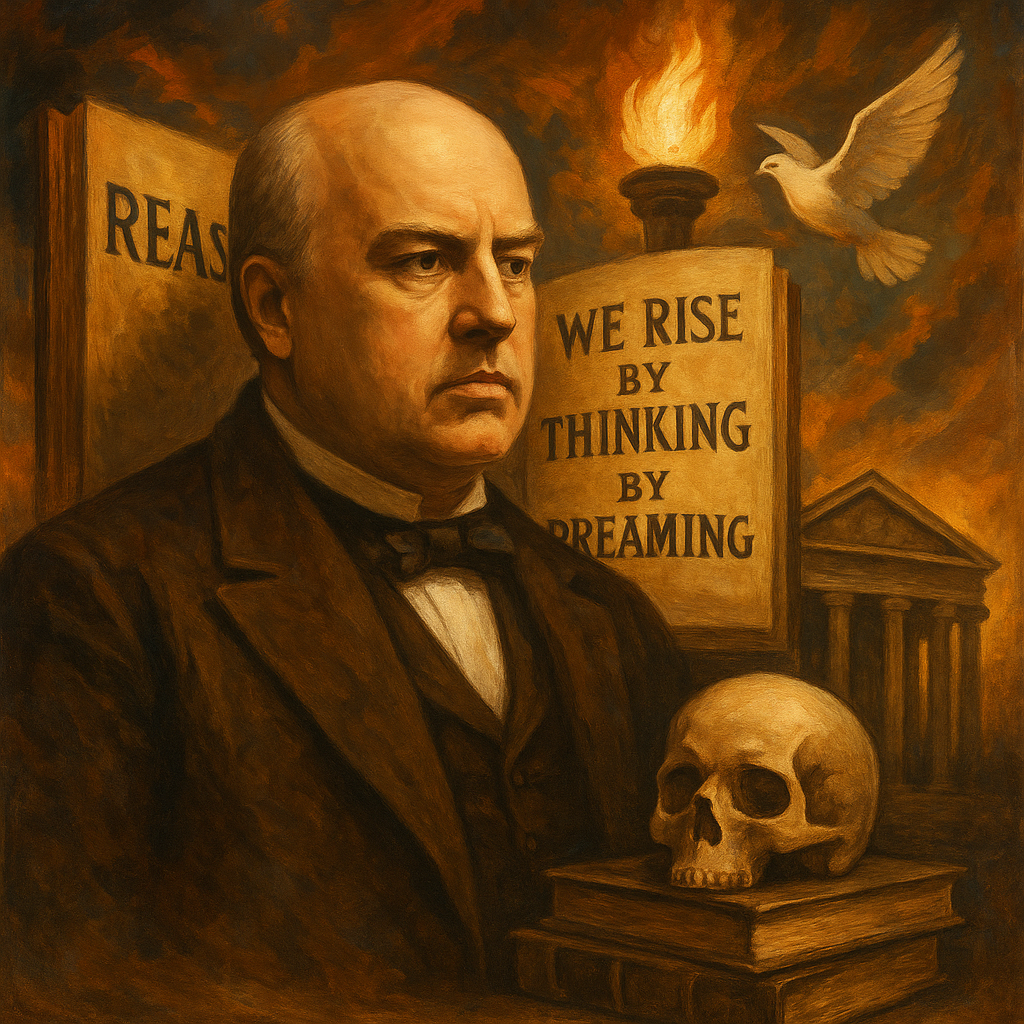
In the landscape of 19th-century America, a figure emerged whose words resonated with the fervor of a revolution. Robert Green Ingersoll, often dubbed “The Great Agnostic,” was a towering intellectual whose advocacy for free thought and skepticism sparked conversations that transcended his era. His eloquent oratory and provocative quotes not only captured the spirit of his time but continue to inspire and challenge the status quo today. As we delve into the life of this remarkable man, we will explore the meaning behind some of his most significant quotes, illustrating why Ingersoll’s legacy endures.
Born on August 11, 1833, in Dresden, New York, Robert Green Ingersoll was raised in an environment that fostered critical thought and inquiry. His father, a staunch abolitionist and an advocate for education, instilled in him a sense of justice and a thirst for knowledge. As a young boy, Ingersoll’s passion for literature and philosophy was evident, and he quickly outgrew the confines of conventional religious thought, questioning the dogmas that surrounded him.
Ingersoll studied law and became a successful attorney, but it was his gift for oration that would bring him into the public eye. In the late 19th century, he began delivering lectures that challenged the religious and cultural norms of his time. His speeches often tackled themes of reason, freedom, and the human experience, compelling many to rethink their beliefs. At a time when society was steeped in Victorian values and religious dogma, Ingersoll’s boldness was refreshing, and his powerful rhetoric made him a beloved figure to many and a target for others.
Ingersoll’s life was marked by personal tragedy as well; the loss of his beloved wife, Eva, deeply affected him. This experience shaped his views on mortality and the afterlife, adding a layer of poignancy to his worldview. It was during these moments of grief that Ingersoll’s understanding of humanity’s shared struggles became even more profound, setting the stage for his future quotes that would speak not only to reason but also to compassion.
One of Ingersoll’s most famous quotes is, “The greatest test of courage on earth is to bear defeat without losing heart.” This statement encapsulates much of his philosophy, highlighting resilience in the face of adversity. Ingersoll understood that life is filled with trials and tribulations and that true strength lies not in never failing but in the ability to rise after a fall. His own life was a testament to this tenacity, and he often encouraged others to embrace their struggles as a means of personal growth.
Another powerful quote from Ingersoll is, “Happiness is the only good. The place to be happy is here. The time to be happy is now.” This reflects his belief in the importance of the present moment and the pursuit of joy in everyday life. His insights into happiness were revolutionary; he advocated for the idea that joy is not a distant goal but an everyday choice. In a world often mired in despair, Ingersoll’s message remains a clarion call to seize the day and cultivate happiness right where we are.
Ingersoll’s quotes often challenged the status quo, sparking debates about faith, science, and individual liberties. He famously stated, “I do not believe in the creed professed by the Jewish church, by the Roman church, by the Protestant church, nor by any church that my fellow men have built.” This assertion highlighted his unwavering commitment to rational thought and the importance of personal belief systems. For Ingersoll, religion should not be a dogma imposed by institutions but a personal journey toward understanding.
Robert Green Ingersoll’s influence extends far beyond his lifetime. As a public intellectual, he paved the way for modern secular thought and championed the rights of individuals to think freely. His legacy is woven into the fabric of contemporary discussions about religion, science, and individual liberty. Ingersoll’s ideas resonate through the work of later thinkers and activists who continue to fight for rational discourse and human rights.
Ingersoll’s oratory skills and the depth of his ideas have left an indelible mark on American culture. He has inspired generations to explore the complexities of existence, urging individuals to think critically and act compassionately. His works, such as “The Gods” and “The Liberty of Man, Woman and Child,” serve as reminders of the importance of questioning the norm and seeking truth through reason.
As we reflect on the life and legacy of Robert Green Ingersoll, we find a source of inspiration that encourages us to be courageous in our convictions. His quotes serve as guiding lights, urging us to embrace our humanity, seek happiness in the present, and stand firm in our beliefs—even in the face of adversity. Ingersoll’s spirit continues to echo through the ages, reminding us that the pursuit of knowledge and the celebration of life are timeless endeavors worth undertaking. Let us take his wisdom to heart, for in the words of Ingersoll himself, “We rise by lifting others.” Embrace that spirit today, and let it guide you on your own journey of exploration and fulfillment.