
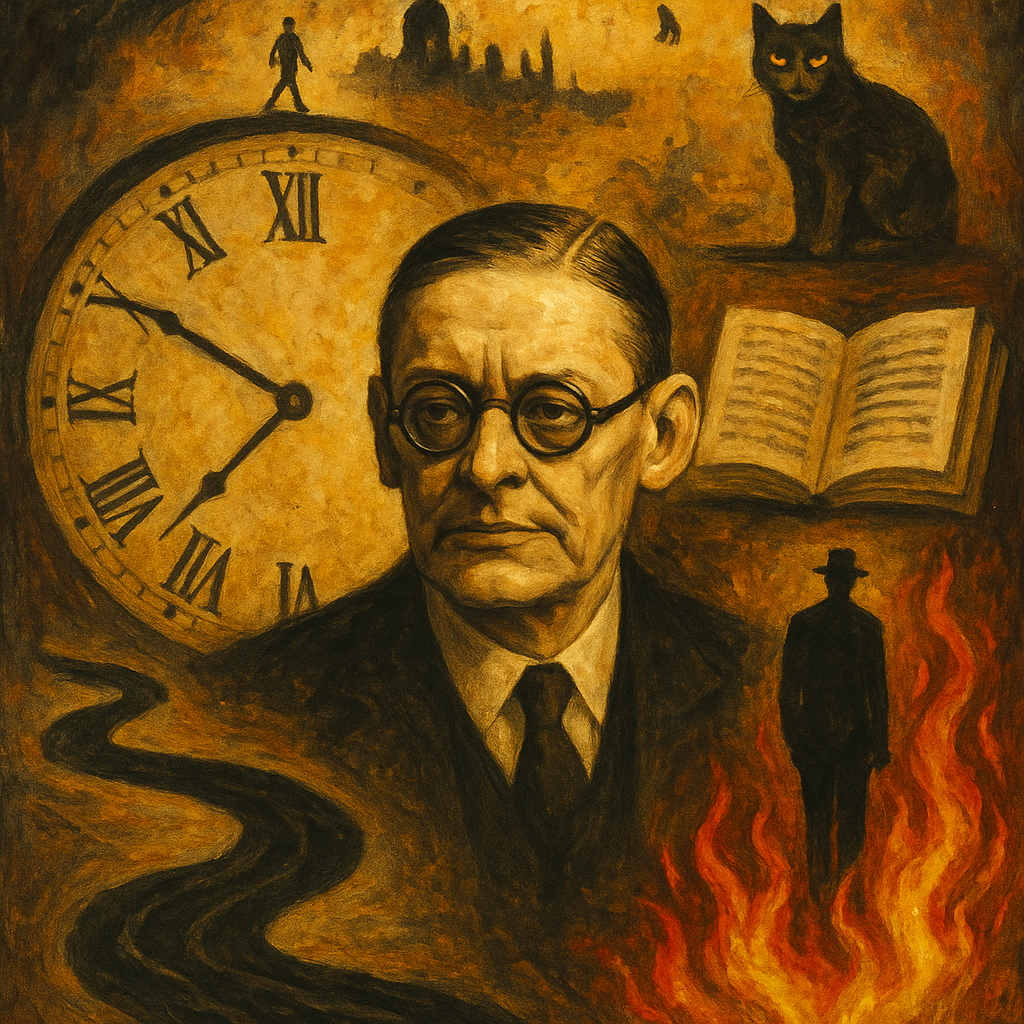
In the world of literature, few names resonate as profoundly as that of T. S. Eliot. A poet, playwright, essayist, and literary critic, Eliot’s work has traversed the boundaries of time and culture, inviting readers to delve deeply into the complexities of the human experience. His words often linger in the corners of our minds, leaving us with thoughts that challenge our perceptions of life. As we explore the life of T. S. Eliot, we unravel the threads of his profound quotes, each one a window into his rich inner world and a reflection of the era he influenced.
Born on September 26, 1888, in St. Louis, Missouri, Thomas Stearns Eliot grew up in a well-educated and socially engaged family. He was the youngest of seven children, and his upbringing was steeped in both culture and intellect. After graduating from Harvard University, Eliot’s thirst for knowledge led him to Paris, where he mingled with the avant-garde thinkers of his time. It was here that his poetic voice began to take shape, influenced by the innovative styles of the European literary scene.
Eliot’s early works, including “The Love Song of J. Alfred Prufrock,” marked him as a pioneering force in modernist poetry. His writing often reflected the disillusionment of the post-World War I generation, a sentiment encapsulated in his famous lines: “April is the cruellest month.” This quote from “The Waste Land” speaks to the paradox of renewal—how the promise of spring can evoke deeper emotional turmoil. Eliot’s own life mirrored these complexities; he struggled with mental health issues throughout his life, often using his poetry to navigate the chaos within.
As a literary figure, Eliot also wore many hats. He worked as a literary editor and was instrumental in promoting the works of other writers, including the likes of Virginia Woolf and James Joyce. His critical essays, such as “Tradition and the Individual Talent,” delve into the relationship between past and present in literature, emphasizing the importance of historical context. This delicate interplay defines much of Eliot’s influence, as he bridged the gap between tradition and modernity.
T. S. Eliot’s quotes often reveal profound insights about life, love, and the human condition. One of his most notable lines—“Only those who will risk going too far can possibly find out how far one can go”—encapsulates the essence of his philosophy. Here, Eliot encourages us to embrace uncertainty and explore the unknown, suggesting that true growth lies beyond the boundaries of our comfort zones. This perspective aligns with his own life, where he navigated both personal and professional risks to redefine the landscape of modern literature.
The depth of Eliot’s quotes often mirrors the complexities of his own experiences. In “East Coker,” he muses, “In my beginning is my end.” This succinct reflection highlights the cyclical nature of life and the interconnectedness of beginnings and endings. Just as Eliot’s poetry frequently circles back to themes of time and memory, this quote serves as a reminder that our origins shape our destinies. The struggles and triumphs of our past inform our present and guide our future.
Eliot’s work also delves into the nature of faith and doubt. In “Four Quartets,” he writes, “The only wisdom we can hope to acquire is the wisdom of humility.” This quote encourages introspection, a theme that resonates throughout Eliot’s oeuvre. By acknowledging our limitations, we open ourselves to a greater understanding of the world and our place within it. In this way, Eliot’s quotes serve as a compass, guiding readers through the labyrinth of existence.
T. S. Eliot’s legacy extends far beyond his individual works; he has become a cornerstone of modern literature. His innovative approach to poetry paved the way for countless writers who followed. His influence can be seen in the works of poets such as Sylvia Plath and Anne Sexton, who, inspired by Eliot, explored the depths of human emotion and experience in their own writing.
Moreover, Eliot’s contributions to literary criticism have shaped the landscape of literary studies. His emphasis on the importance of tradition and context continues to resonate with scholars and aspiring writers alike. The richness of Eliot’s life experience—his travels, his academic pursuits, and his personal battles—inform his writing, creating a tapestry of insight that invites readers to explore deeper meanings within their own lives.
As we reflect on T. S. Eliot’s journey, it’s clear that his words remain as relevant today as they were during his lifetime. From his exploration of the human psyche to his profound observations on time and existence, Eliot’s quotes encourage us to embrace the complexity of life. His legacy is not merely a collection of poems but an invitation to engage with the world thoughtfully and creatively.
In conclusion, T. S. Eliot’s life and words remind us that literature has the power to transcend time and space, connecting us across generations. His quotes challenge us to reflect, to question, and to grow, encouraging us to venture beyond the safe confines of our understanding. In a world that often feels chaotic and fragmented, Eliot’s insights offer a guiding light, illuminating the path toward self-discovery and understanding. So, let us carry his wisdom with us, embracing the richness of our own journeys as we navigate the intricate tapestry of life.