
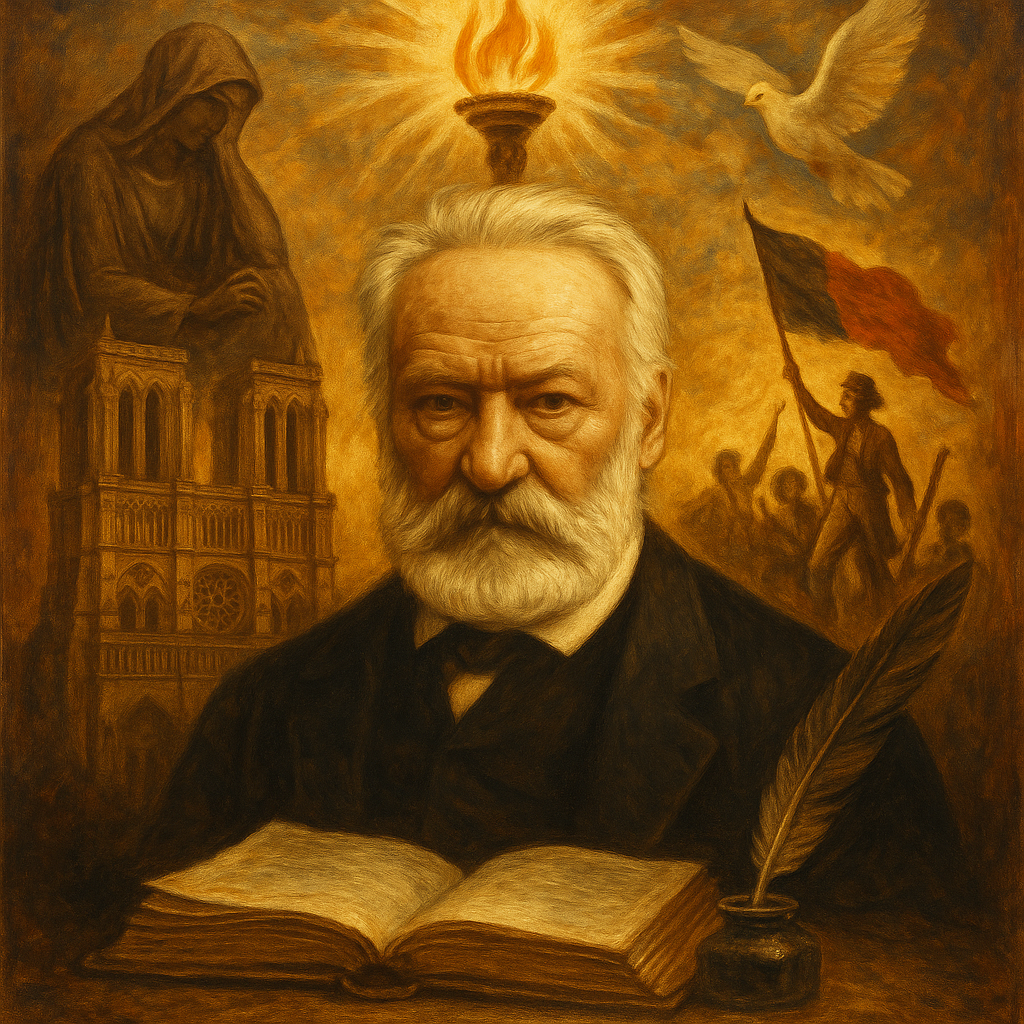
In the grand tapestry of literature, few figures loom as large as Victor Hugo. A poet, novelist, and playwright, his influence transcended the written word, echoing through time as a voice for the marginalized and oppressed. In exploring Hugo’s life, we not only uncover a man of profound intellect and creativity but also the depth of his heart—a heart that beat for justice, love, and humanity. As we delve into the layers of his biography, we’ll also explore the meaning of some of his most impactful quotes, each serving as a window into his soul and worldview.
Victor Hugo was born on February 26, 1802, in Besançon, France. The son of a general in Napoleon’s army, Hugo grew up amidst the turbulence of a nation in flux. His early life was marked by the dichotomy of wealth and poverty, a theme that would permeate his works. As a young boy, he showed an extraordinary talent for writing, publishing his first poem at just 15. This precocious gift foreshadowed a lifetime of creative brilliance.
Hugo’s literary career took off in the 1820s with the publication of “Odes et Ballades,” establishing him as a leading figure in the Romantic movement. However, it was his later novels, particularly “Les Misérables” and “Notre-Dame de Paris,” that cemented his legacy. These profound works not only captivated readers with their dramatic storytelling but also illuminated the struggles of the human condition—love, redemption, and social justice.
Hugo’s life was not without personal trials. He faced the tragedies of losing loved ones, political exile due to his opposition to the oppressive regime of Louis-Napoléon Bonaparte, and the constant societal upheaval that shaped his world. Through it all, Hugo transformed his pain into art, creating narratives that spoke to the resilience of the human spirit.
One of Hugo’s most memorable quotes, “Even the darkest night will end and the sun will rise,” encapsulates his unwavering belief in hope and renewal. This sentiment reflects the essence of his life experiences—the belief that no matter how dire circumstances may seem, change is inevitable. His poignant words resonate with those who’ve faced adversity, reminding us that light often follows the darkest of times.
Hugo’s quotes often reflect his profound empathy for humanity. In another famous saying, he claimed, “There is nothing like a dream to create the future.” Here, Hugo emphasizes the importance of vision and aspiration in shaping our destinies. His own life was a testament to this ideal; through his dreams and convictions, he not only influenced literature but also ignited the flames of social reform in 19th century France.
His works are laced with a sense of urgency that encourages readers to reflect on their roles in society. “To love another person is to see the face of God,” he wrote in “Les Misérables,” which speaks to his belief in the divine nature of love and connection. These words invite us to consider how our relationships with others can elevate our existence and infuse it with meaning.
Victor Hugo’s legacy extends far beyond the pages of his novels. His voice championed the rights of the downtrodden and sparked movements that sought to address societal issues such as poverty and injustice. His influence reached beyond literature, inspiring political thought and activism across Europe and beyond.
Today, Hugo’s works continue to be adapted into films, musicals, and theatrical performances, testifying to his timeless relevance. His ability to weave social commentary into narratives of love and sacrifice allows his stories to resonate with new generations. The themes he explored are as pertinent today as they were in his lifetime, reminding us of our collective humanity.
Hugo’s life and quotes instill a sense of courage and hope. Whether reflecting on dreams, love, or the inevitability of change, his words challenge us to engage with the world around us thoughtfully. They beckon us to not only dream but to act—transforming our aspirations into tangible change.
As we reflect on Victor Hugo’s profound impact, we find an enduring source of inspiration. His life, characterized by passion and resilience, teaches us the importance of standing up for justice, nurturing our dreams, and embracing the power of love. In the words of this literary giant, we discover the strength to face our own darkest nights, knowing that the sun will rise again.
In a world that often feels fractured, Hugo’s legacy calls us to unite in compassion and to advocate for those whose voices go unheard. Let us carry his wisdom into our lives, allowing it to shape our actions and enrich our connections with others. Through his quotes and the lessons of his life, we can continue to illuminate the path forward—one filled with hope, love, and the promise of a better tomorrow.