
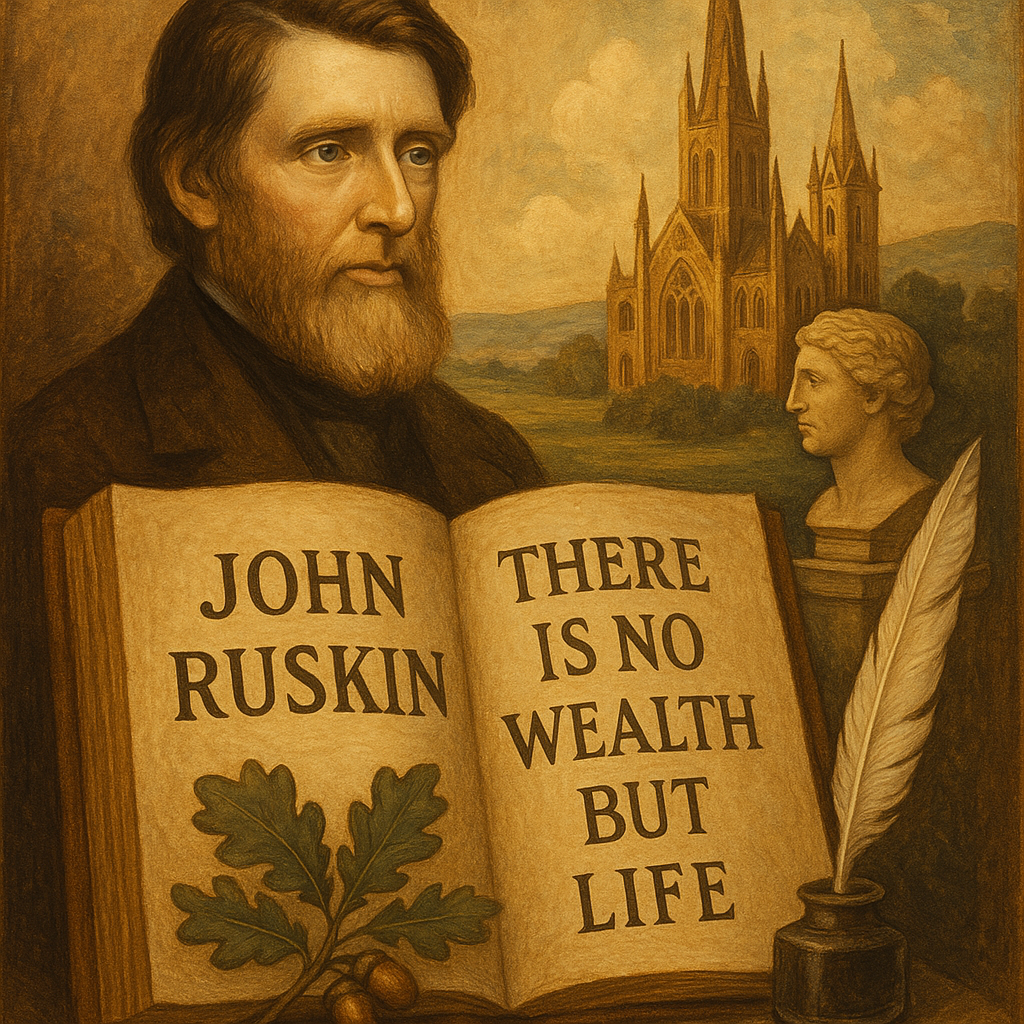
John Ruskin, a name that resonates through time, was a thinker, artist, and critic whose profound insights have shaped our understanding of art, nature, and society. His life was a tapestry woven with passion, creativity, and a fervent desire to illuminate the world around him. As we delve into the life of this remarkable man, we will uncover not only his biography but also the essence behind some of his most notable quotes, exploring how they embody his values and views on life.
Born on February 8, 1819, in London, England, John Ruskin came into a world that was rapidly changing, marked by the Industrial Revolution. His early life was filled with the beauty of nature, which was a significant influence on his later works. His father, a successful wine merchant, encouraged a love of the arts, particularly painting and literature. This nurturing environment allowed Ruskin to develop his talents, and he would eventually become one of the most influential art critics of the Victorian era.
Ruskin attended the University of Oxford, where he was exposed to the great thinkers and artists of his time. His first major work, *Modern Painters*, published in 1843, was a defense of the landscape painter J.M.W. Turner, arguing that art should express the truth of nature. This book catapulted Ruskin into the public eye and established him as a leading voice in art criticism. Throughout his life, he wrote extensively, encompassing topics from architecture to education, while also delving into social issues, particularly the effects of industrialization on society.
However, Ruskin’s life was not without its shadows. His marriage to Effie Gray was marred by complications and ultimately led to an annulment, deeply affecting him personally. He struggled with mental health issues, which influenced his writings and perceptions of the world. Yet, through his trials, Ruskin remained committed to his vision of a more meaningful existence, one that integrated art, nature, and humanity.
Ruskin’s eloquence resonates through his many quotes, each revealing layers of his philosophy. One of his most famous quotes is, “The highest reward for a person’s toil is not what they get for it, but what they become by it.” This statement encapsulates Ruskin’s belief in the transformative power of work. He understood that labor is not merely a means to an end; it is a journey that shapes our character and morals. His reverence for the process of creation reflects his passion for art and nature, revealing the core of his ideology: that true fulfillment lies not in material success but in personal growth and understanding.
Another poignant quote is, “There is no wealth but life.” Here, Ruskin emphasizes the intrinsic value of life itself, underscoring his belief that our experiences and relationships hold far greater worth than possessions. In an era increasingly consumed by industrial progress, this statement serves as a reminder to pause and appreciate the beauty and complexity of our existence. It’s a call to cherish life’s moments over the accumulation of wealth, a notion that remains relevant today.
Ruskin’s quotes often carry a sense of urgency, urging us to reconnect with nature and our humanity. In a world where the pace of life can be overwhelming, his words encourage us to find balance and beauty in the simplest of things. They invite introspection and inspire us to cultivate a deeper connection with the world around us.
John Ruskin’s influence stretches far beyond his lifetime; his work has impacted artists, writers, and thinkers across generations. His advocacy for social reform and his commitment to merging art with ethics laid the groundwork for movements like the Arts and Crafts Movement, which sought to counteract the dehumanizing effects of industrialization.
Ruskin’s writings continue to inspire contemporary discussions about the role of art in society, the importance of nature, and the ethics of labor. His belief in the moral responsibility of artists to engage with social issues resonates strongly in today’s discourse. As we navigate the complexities of modern life, his insistence on the importance of beauty, truth, and love in our pursuits serves as a guiding light.
Moreover, as we explore Ruskin’s legacy, we recognize the enduring relevance of his quotes. They challenge us to reconsider our values and priorities, reminding us that our time on this earth is fleeting and that the true measure of our lives lies in the depth of our experiences, our connections, and our contributions to the world.
In a world that often seems preoccupied with the hustle of daily life, John Ruskin’s insights serve as a gentle reminder to embrace the beauty of our existence. His life was a testament to the power of creativity, the importance of nature, and the value of meaningful work. As we reflect on his biography and the wisdom encapsulated in his quotes, let us strive to apply his teachings in our lives.
Whether through our work, our relationships, or our artistic endeavors, may we aspire to grow, to connect, and to live purposefully. In doing so, we honor the legacy of John Ruskin and the timeless truths he so beautifully articulated.