
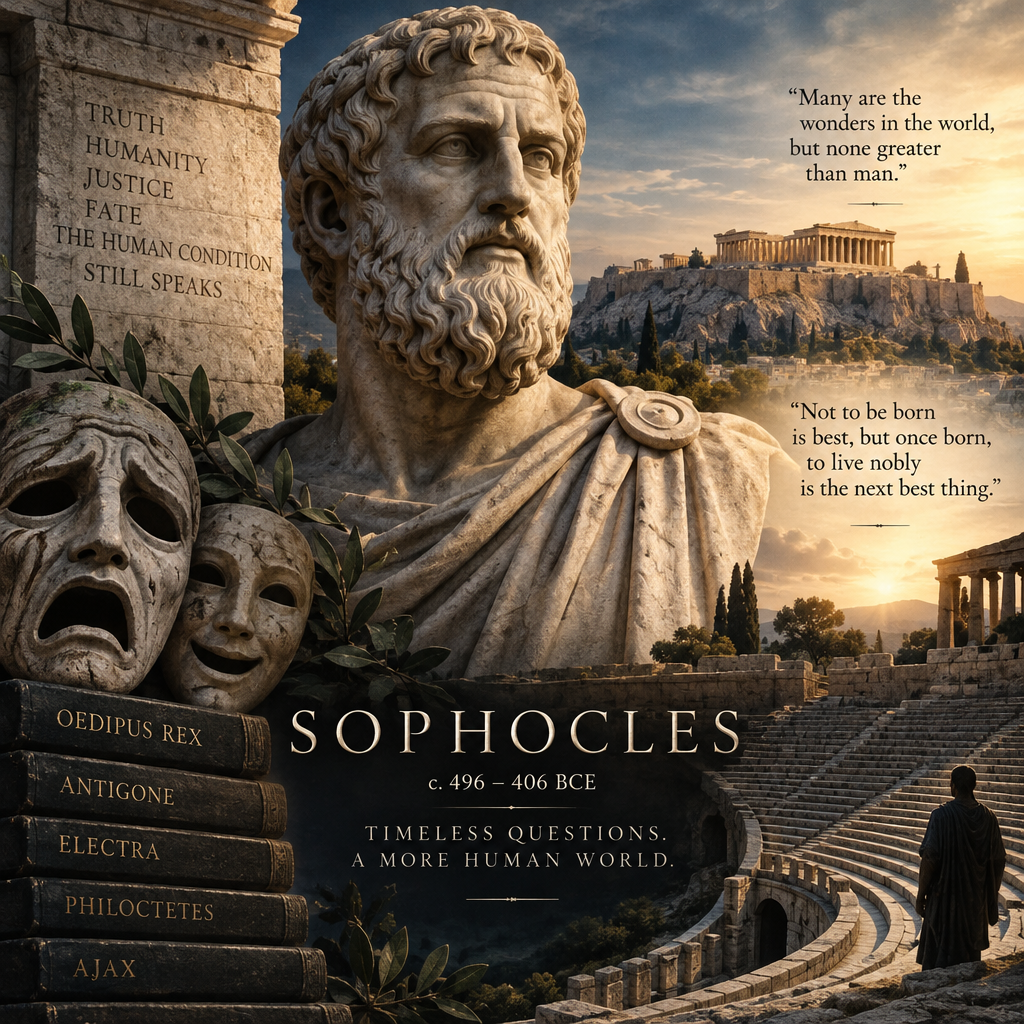
Sophocles, one of the most celebrated playwrights of ancient Greece, has left an indelible mark on the world of literature and philosophy. Born around 497 BC in the city of Colonnus, near Athens, he was a man of vibrant ideas and profound insights, whose works continue to resonate today. As we delve into the life of this remarkable figure, we will uncover the meaning behind some of his most impactful quotes, exploring how they reflect his understanding of the human experience and his enduring legacy.
Sophocles was born into a well-off family, which allowed him an education that many of his contemporaries could only dream of. His early life in Athens, a city blossoming with new ideas and artistic expression, shaped his worldview and ignited his passion for drama. At the tender age of 28, he gained notoriety for his play “Triptolemus,” marking the beginning of a prolific writing career.
Throughout his life, Sophocles wrote over 120 plays, though only seven have survived in complete form. Among these, “Oedipus Rex” and “Antigone” stand as monumental achievements, exploring themes of fate, moral responsibility, and the complexities of human nature. His plays often featured strong, complex characters faced with difficult choices, a reflection of his belief in the power of individual agency amidst an unpredictable world.
Sophocles was also active in public life; he served as a general in the Athenian army and took part in civic affairs. This involvement in politics provided him with insights into the human condition that enriched his storytelling. His experiences in a city grappling with democracy, war, and social change informed his work, making it not just entertainment but a means of philosophical inquiry.
Sophocles’ quotes resonate with depth because they emerge from a rich tapestry of experiences, observations, and timeless truths. One of his most famous quotes, “Wisdom is the reward you get for a lifetime of listening when you’d have preferred to talk,” encapsulates a profound understanding of humility and the value of listening. In an age dominated by rhetoric and debate, Sophocles recognized that true wisdom comes not from speaking but from understanding others’ perspectives.
This quote invites us to reflect on our interactions—how often do we find ourselves too eager to share our opinions rather than absorbing the insights of those around us? Sophocles encourages us to pause, to listen, and to learn. It’s a reminder that growth often occurs in the quiet moments of reflection and receptivity, rather than in the loud exchanges of our daily lives.
Another poignant quote from Sophocles is, “All the greatest things are simple, and many can be expressed in a single word: freedom, justice, honor, duty, mercy, hope.” Here, he distills complex human experiences into fundamental concepts that resonate across cultures and ages. This simplicity is not a sign of naivety but rather an acknowledgment of the core values that underpin human existence. Sophocles invites us to consider what truly matters and to align our lives with these profound principles.
Sophocles’ influence extends far beyond the walls of the ancient theater. His innovations in dramatic form—such as introducing a third actor and expanding the role of the chorus—revolutionized storytelling, setting a standard that would guide playwrights for centuries. His exploration of character and the moral implications of their decisions paved the way for the development of psychological drama in Western literature.
Beyond literature, Sophocles’ thoughts on fate and free will have permeated philosophy, influencing the likes of Shakespeare and Nietzsche. His works are frequently revisited in educational curricula, serving as a bridge to understanding the complexities of human behavior and ethical dilemmas. The themes he grappled with—the struggle against fate, the quest for identity, and the moral weight of choice—remain timeless, echoing in contemporary discussions around personal responsibility and societal expectations.
Sophocles’ commitment to exploring the human condition through his art remains a source of inspiration. His life’s work teaches us that while we may not control our circumstances, we can control our responses. We can embrace the wisdom found in listening, uphold the values that define us, and courageously navigate the challenges we face.
In reflecting on the life and quotes of Sophocles, we find a tapestry rich with wisdom that transcends time and culture. His insights remind us of the importance of humility, the power of simplicity, and the significance of moral choices. As we navigate our paths, let us carry forward the lessons imparted by this ancient playwright, allowing his words to inspire us toward a deeper understanding of ourselves and the world around us. Just as Sophocles shaped the landscape of theater and philosophy, we too can leave our mark by living with intention, embracing the power of our choices, and striving for the timeless values that connect us all.