
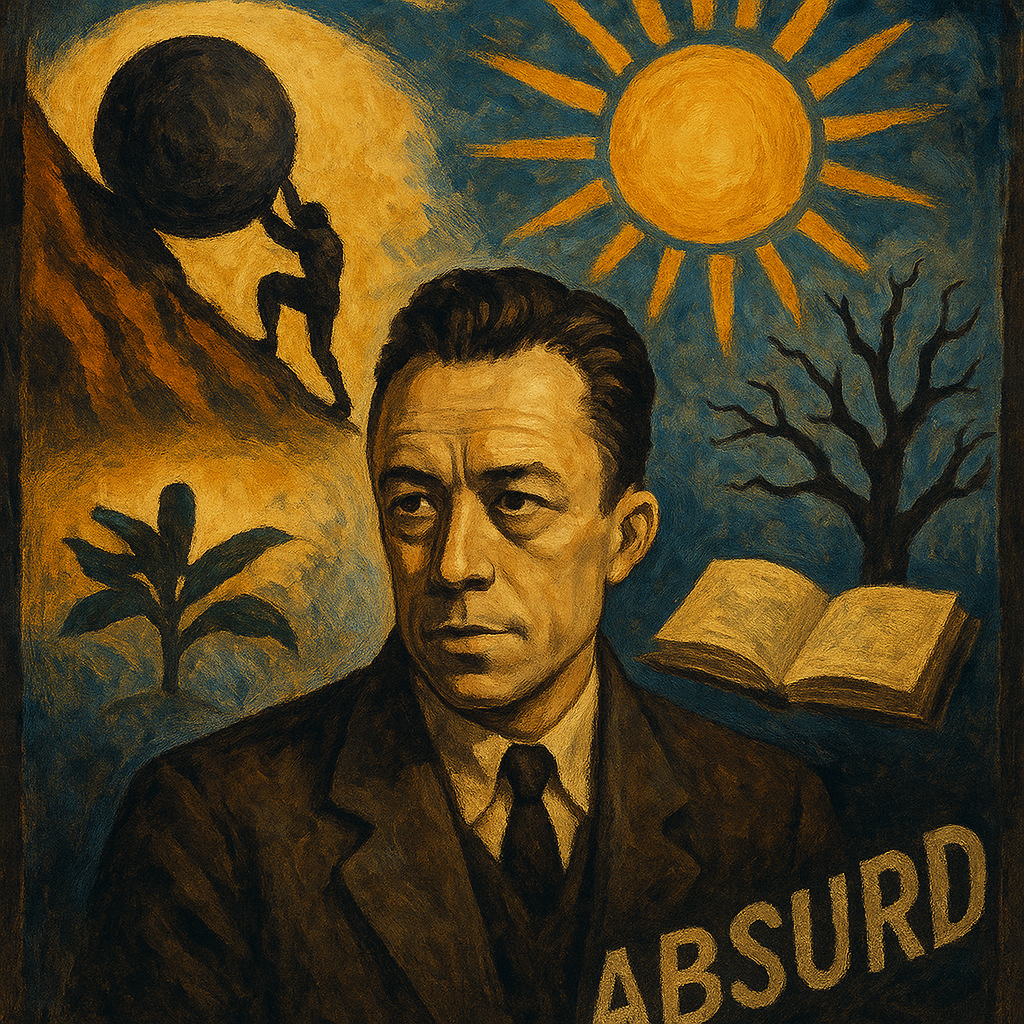
In the twilight shadows of the 20th century, a voice emerged that would forever reshape literature and philosophy. That voice belonged to Albert Camus, a man who danced with the absurdity of existence yet embraced life with fervor. Born on November 7, 1913, in Mondovi, Algeria, Camus’ journey was not merely a quest for meaning but an exploration of the human condition itself. Through his poignant reflections and masterful storytelling, he has left us with an enduring legacy immersed in thought-provoking quotes that inspire contemplation and action.
Albert Camus was born to a poor family; his father was a Frenchman who was killed in World War I when Camus was just a young child. Raised by his mother, who worked tirelessly to support him, he learned the value of resilience early on. This background of hardship and struggle laid the groundwork for the themes of existentialism and absurdism that would permeate his later works.
In 1932, Camus enrolled at the University of Algiers, where he studied philosophy. His education not only honed his intellect but also exposed him to the socio-political tensions of the time. The colonial landscape of Algeria, coupled with the existential crises of the world wars, influenced his philosophical musings. By the age of 30, he had published his first major work, “The Stranger,” a novel that would catapult him into literary stardom.
Camus’ experiences as a journalist during World War II, including his involvement with the French Resistance, further deepened his understanding of justice and human rights. These experiences often seeped into his writing, imbuing his characters with a palpable sense of struggle against the absurd—the conflict between humans’ desire for meaning in a chaotic world.
Among the myriad of Albert Camus quotes, one resonates profoundly: “In the depth of winter, I finally learned that within me there lay an invincible summer.” This quote encapsulates the essence of his philosophy—the idea that despite the harshness of life and its inherent absurdity, the human spirit possesses an undeniable strength.
Camus believed that recognizing the absurdity of existence did not necessitate despair; rather, it invited individuals to create their own meaning. This perspective is beautifully illustrated in “The Myth of Sisyphus,” where he likens the struggle of humanity to that of Sisyphus, eternally rolling a boulder uphill only for it to roll back down. Instead of succumbing to the futility of this endeavor, Camus urges us to imagine Sisyphus happy, as he finds solace in the struggle itself, embracing the act of living without the burden of seeking ultimate purpose.
Another poignant quote, “Man is the only creature who refuses to be what he is,” invites us to reflect on our own identities. Camus challenges us to confront the authenticity of our existence. In a world often plagued by societal expectations and norms, he implores us to embrace our true selves, unfiltered and unapologetic.
Camus’ influence stretches far beyond the pages of his works; he became a beacon of philosophical thought and a symbol of resistance against oppression. His writings have inspired countless thinkers, writers, and activists, urging individuals to challenge the status quo and fight for justice.
In 1957, Camus was awarded the Nobel Prize in Literature, recognizing the profound impact of his literary contributions. His works, including “The Plague,” “The Fall,” and “The Rebel,” continue to be studied and cherished, serving as powerful commentaries on the human experience.
Moreover, Camus’ legacy is not confined solely to literature; it permeates discussions on existentialism, ethics, and the human condition. His assertion that “the struggle itself toward the heights is enough to fill a man’s heart” serves as a timeless reminder that the journey is just as significant as the destination.
In a world that often feels chaotic, the teachings and quotes of Albert Camus offer a comforting embrace—a gentle nudge to confront the absurdity of our existence while discovering strength and joy within it. His life, fraught with challenges yet rich in experience, teaches us that we are not alone in our struggles.
As we navigate the complexities of our own lives, let us hold fast to Camus’ belief that within us lies an invincible summer. By embracing our authentic selves and finding meaning in the struggles we face, we can create a legacy of our own—a testament to the resilience of the human spirit. So, let us carry forward the essence of Camus, daring to live fully and authentically in a world that often defies understanding.